
pynibs package
Subpackages
Submodules
pynibs.coil module
- pynibs.coil.calc_coil_position_pdf(fn_rescon=None, fn_simpos=None, fn_exp=None, orientation='quaternions', folder_pdfplots=None)
Determines the probability density functions of the transformed coil position (x’, y’, z’) and quaternions of the coil orientations (x’’, y’’, z’’)
- Parameters
fn_rescon (str) – Filename of the results file from TMS experiments (results_conditions.csv)
fn_simpos (str) – Filename of the positions and orientation from TMS experiments (simPos.csv)
fn_exp (str) – Filename of experimental.csv file from experiments
orientation (str) – Type of orientation estimation: ‘quaternions’ or ‘euler’
folder_pdfplots (str) – Folder, where the plots of the fitted pdfs are saved (omitted if not provided)
- Returns
pdf_paras_location (list of list of np.ndarrays [n_conditions]) –
Pdf parameters (limits and shape) of the coil position for x’, y’, and z’ for each:
beta_paras … [p, q, a, b] (2 shape parameters and limits)
moments … [data_mean, data_std, beta_mean, beta_std]
p_value … p-value of the Kolmogorov Smirnov test
uni_paras … [a, b] (limits)
pdf_paras_orientation_euler (list of np.ndarray [n_conditions]) –
Pdf parameters (limits and shape) of the coil orientation Psi, Theta, and Phi for each:
beta_paras … [p, q, a, b] (2 shape parameters and limits)
moments … [data_mean, data_std, beta_mean, beta_std]
p_value … p-value of the Kolmogorov Smirnov test
uni_paras … [a, b] (limits)
OP_mean (List of [3 x 4] np.ndarray [n_conditions]) – List of mean coil position and orientation for different conditions (global coordinate system)
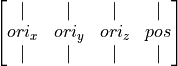
OP_zeromean (list of [3 x 4 x n_con_each] np.ndarray [n_conditions]) – List over conditions containing zero-mean coil orientations and positions
V (list of [3 x 3] np.ndarrays [n_conditions]) – Transformation matrix of coil positions from global coordinate system to transformed coordinate system
P_transform (list of np.ndarray [n_conditions]) – List over conditions containing transformed coil positions [x’, y’, z’] of all stimulations (zero-mean, rotated by SVD)
quaternions (list of np.ndarray [n_conditions]) – List over conditions containing imaginary part of quaternions [x’’, y’’, z’’] of all stimulations
- pynibs.coil.calc_coil_transformation_matrix(LOC_mean, ORI_mean, LOC_var, ORI_var, V)
Calculate the modified coil transformation matrix needed for simnibs based on location and orientation variations observed in the framework of uncertainty analysis
- Parameters
LOC_mean (np.ndarray of float) – (3), Mean location of TMS coil
ORI_mean (np.ndarray of float) –
(3 x 3) Mean orientations of TMS coil

LOC_var (np.ndarray of float) –
Location variation in normalized space (dx’, dy’, dz’), i.e. zero mean and projected on principal axes
ORI_var (np.ndarray of float) –
Orientation variation expressed in Euler angles [alpha, beta, gamma] in deg
V (np.ndarray of float) – (3x3) V-matrix containing the eigenvectors from _,_,V = numpy.linalg.svd
- Returns
mat (np.ndarray of float)
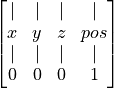
(4, 4) Transformation matrix containing 3 axis and 1 location vector –
- pynibs.coil.check_coil_position(points, hull)
Check if magnetic dipoles are lying inside head region
- pynibs.coil.create_stimsite_from_exp_hdf5(fn_exp, fn_hdf, datanames=None, data=None, overwrite=False)
This takes an experiment.hdf5 file and creates an .hdf5 + .xdmf tuple for all coil positions for visualization.
- Parameters
fn_exp (str) – Path to experiment.hdf5
fn_hdf (basestring) – Filename for the resulting .hdf5 file. The .xdmf is saved with the same basename. Folder should already exist.
datanames (basestring or list of basestring) – Dataset names for _data_. Default: None.
data (np.ndarray) – Dataset array with (len(poslist.pos), len(datanames()). Default: None.
overwrite (boolean) – Overwrite existing files. Default: False.
- pynibs.coil.create_stimsite_from_list(fn_hdf, poslist, datanames=None, data=None, overwrite=False)
This takes a TMSLIST from simnibs and creates a .hdf5 + .xdmf tuple for all positions.
Centers and coil orientations are written so disk.
- Parameters
fn_hdf (basestring) – Filename for the .hdf5 file. The .xdmf is saved with the same basename. Folder should already exist.
datanames (basestring or list of basestring) – Dataset names for _data_. Default: None.
data (np.ndarray) – Dataset array with (len(poslist.pos), len(datanames()). Default: None.
poslist (TMSLIST object (simnibs.simulation.simstruct.TMSLIST)) – poslist.pos[*].matsimnibs have to be set.
overwrite (boolean) – Overwrite existing files. Default: False.
- pynibs.coil.create_stimsite_from_matsimnibs(fn_hdf, matsimnibs, datanames=None, data=None, overwrite=False)
This takes a matsimnibs array and creates an .hdf5 + .xdmf tuple for all coil positions for visualization.
Centers and coil orientations are written disk.
- Parameters
fn_hdf (string) – Filename for the .hdf5 file. The .xdmf is saved with the same basename. Folder should already exist.
matsimnibs (np.ndarray) –
(4, 4, n_pos) Matsimnibs matrices containing the coil orientation (x,y,z) and position (p)
[ | | | | ] [ x y z p ] [ | | | | ] [ 0 0 0 1 ]
datanames (string or list of string) – Dataset names for _data_. Default: None.
data (np.ndarray, optional) – (len(poslist.pos), len(datanames).
overwrite (boolean, default: False) – Overwrite existing files.
- pynibs.coil.create_stimsite_from_tmslist(fn_hdf, poslist, datanames=None, data=None, overwrite=False)
This takes a TMSLIST from simnibs and creates a .hdf5 + .xdmf tuple for all positions.
Centers and coil orientations are written so disk.
- Parameters
fn_hdf (basestring) – Filename for the .hdf5 file. The .xdmf is saved with the same basename. Folder should already exist.
datanames (basestring or list of basestring) – Dataset names for _data_. Default: None.
data (np.ndarray) – Dataset array with (len(poslist.pos), len(datanames()). Default: None.
poslist (TMSLIST object (simnibs.simulation.simstruct.TMSLIST)) – poslist.pos[*].matsimnibs have to be set.
overwrite (boolean) – Overwrite existing files. Default: False.
- pynibs.coil.create_stimsite_hdf5(fn_exp, fn_hdf, conditions_selected=None, sep='_', merge_sites=False, fix_angles=False, data_dict=None, conditions_ignored=None)
Reads results_conditions and creates an hdf5/xdmf pair with condition-wise centers of stimulation sites and coil directions as data.
- Parameters
fn_exp (str) – Path to results.csv
fn_hdf (str) – Path where to write file. Gets overridden if already existing
conditions_selected (str or list of str, Default=None) – List of conditions returned by the function, the others are omitted, If None, all conditions are returned
sep (str, Default: "_") – Separator between condition label and angle (e.g. M1_0, or M1-0)
merge_sites (boolean) – If true, only one coil center per site is generated.
fix_angles (boolean) – rename 22.5 -> 0, 0 -> -45, 67.5 -> 90, 90 -> 135
data_dict (dict ofnp.ndarray of float [n_stimsites] (optional), default: None) – Dictionary containing data corresponding to the stimulation sites (keys)
conditions_ignored (str or list of str, Default=None) – Conditions, which are not going to be included in the plot
- Returns
<Files> – Contains information about condition-wise stimulation sites and coil directions (fn_hdf)
- Return type
hdf5/xdmf file pair
Example
- Example::
- pynibs.create_stimsite_hdf5(‘/data/pt_01756/probands/15484.08/exp/1/experiment_corrected.csv’,
‘/data/pt_01756/tmp/test’, True, True)
- pynibs.coil.get_coil_dipole_pos(coil_fn, matsimnibs)
Apply transformation to coil dipoles and return position.
- pynibs.coil.get_invalid_coil_parameters(param_dict, coil_position_mean, svd_v, del_obj, fn_coil, fn_hdf5_coilpos=None)
Finds gpc parameter combinations, which place coil dipoles inside subjects head. Only endpoints (and midpoints) of the parameter ranges are examined.
get_invalid_coil_parameters(param_dict, pos_mean, v, del_obj, fn_coil, fn_hdf5_coilpos=None)
- pynibs.coil.sort_opt_coil_positions(fn_coil_pos_opt, fn_coil_pos, fn_out_hdf5=None, root_path='/0/0/', verbose=False, print_output=False)
Sorts coil positions according to Traveling Salesman problem
- Parameters
fn_coil_pos_opt (str) – Name of .hdf5 file containing the optimal coil position indices
fn_coil_pos (str) – Name of .hdf5 file containing the matsimnibs matrices of all coil positions
fn_out_hdf5 (str) – Name of output .hdf5 file (will be saved in the same format as fn_coil_pos_opt)
verbose (bool, optional, default: False) – Print output messages
print_output (bool or str, optional, default: False) – Print output image as .png file showing optimal path
- Return type
<file> .hdf5 file containing the sorted optimal coil position indices
- pynibs.coil.test_coil_position_gpc(parameters)
Testing valid coil positions for gPC analysis
- pynibs.coil.write_coil_pos_hdf5(fn_hdf, centers, m0, m1, m2, datanames=None, data=None, overwrite=False)
Creates a .hdf5 + .xdmf file for all coil positions.
Centers and coil orientations are written to disk.
- Parameters
fn_hdf (basestring) – Filename for the .hdf5 file. The .xdmf is saved with the same basename. Folder should already exist.
centers (np.ndarray of float [n_pos x 3]) – Coil positions
m0 (np.ndarray of float [n_pos x 3]) – Coil orientation x-axis (looking at the active (patient) side of the coil pointing to the right)
m1 (np.ndarray of float [n_pos x 3]) – Coil orientation y-axis (looking at the active (patient) side of the coil pointing up away from the handle)
m2 (np.ndarray of float [n_pos x 3]) – Coil orientation z-axis (looking at the active (patient) side of the coil pointing to the patient)
datanames (basestring or list of basestring [n_data]) – Dataset names for _data_. Default: None.
data (np.ndarray [n_pos, n_data]) – Dataset array with (len(poslist.pos), len(datanames()). Default: None.
overwrite (boolean) – Overwrite existing files. Default: False.
pynibs.freesurfer module
- pynibs.freesurfer.data_sub2avg(fn_subject_obj, fn_average_obj, hemisphere, fn_in_hdf5_data, data_hdf5_path, data_label, fn_out_hdf5_geo, fn_out_hdf5_data, mesh_idx=0, roi_idx=0, subject_data_in_center=True, data_substitute=-1, verbose=True, replace=True, reg_fn='sphere.reg')
Maps the data from the subject space to the average template. If the data is given only in an ROI, the data is mapped to the whole brain surface.
- Parameters
fn_subject_obj (str) – Filename of subject object .pkl file (incl. path) (e.g.: …/probands/subjectID/subjectID.pkl)
fn_average_obj (str) – Filename of average template object .pkl file (incl. path) (e.g.: …/probands/avg_template/avg_template.pkl)
hemisphere (str) – Define hemisphere to work on (‘lh’ or ‘rh’ for left or right hemisphere, respectively)
fn_in_hdf5_data (str) – Filename of .hdf5 data input file containing the subject data
data_hdf5_path (str) – Path in .hdf5 data file where data is stored (e.g. ‘/data/tris/’)
data_label (str or list of str) – Label of datasets contained in hdf5 input file to map
fn_out_hdf5_geo (str) – Filename of .hdf5 geo output file containing the geometry information
fn_out_hdf5_data (str) – Filename of .hdf5 data output file containing the mapped data
mesh_idx (int) – Index of mesh used in the simulations
roi_idx (int) – Index of region of interest used in the simulations
subject_data_in_center (boolean) – Specify if the data is given in the center of the triangles or in the nodes (Default = True)
data_substitute (float) – Data substitute with this number for all points outside the ROI mask
verbose (boolean) – Verbose output (Default: True)
replace (boolean) – Replace output files (Default: True)
reg_fn (string) – Sphere.reg fn
- Returns
<Files> – Geometry and corresponding data files to plot with Paraview:
fn_out_hdf5_geo.hdf5: geometry file containing the geometry information of the average template
fn_out_hdf5_data.hdf5: geometry file containing the data
- Return type
.hdf5 files
- pynibs.freesurfer.freesurfer2vtk(in_fns, out_folder, hem='lh', surf='pial', prefix=None, fs_subject='fsaverage', fs_subjects_dir=None)
- pynibs.freesurfer.make_average_subject(subjects, subject_dir, average_dir, fn_reg='sphere.reg')
Generates the average template from a list of subjects using the freesurfer average.
- Parameters
subjects (list of str) – paths of subjects directories, where the freesurfer files are located (e.g.: for simnibs mri2mesh …/fs_SUBJECT_ID)
subject_dir (str) – temporary subject directory of freesurfer (symlinks of subjects will be generated in there and average template will be temporarily stored before it is copied to average_dir)
average_dir (str) – path to directory where average template will be stored (e.g.: probands/avg_template_15/mesh/0/fs_avg_template_15
fn_reg (str <Default: sphere.reg --> ?h.sphere.reg>) – Filename suffix of freesurfer registration file containing registration information to template
- Returns
<Files> – Average template in average_dir and registered curvature files, ?h.sphere.reg in subjects/surf folders
- Return type
.tif and .reg files
- pynibs.freesurfer.make_group_average(subjects=None, subject_dir=None, average=None, hemi='lh', template='mytemplate', steps=3, n_cpu=2, average_dir=None)
Creates a group average from scratch, based on one subject. This prevents for example the fsaverage problems of large elements at M1, etc.
- Parameters
subject_dir (str) – temporary subject directory of freesurfer (symlinks of subjects will be generated in there and average template will be temporarily stored before it is copied to average_dir)
average (string (Optional)) – Which subject to base new average template on? Default: subjects[0]
hemi (string (Optional)) – lh or rh
template (string <Default: mytemplate>) – Basename of new template
steps (int <Default: 2>) – Number of iterations
n_cpu (int <Default: 4>) – How many cores for multithreading?
average_dir (str) – Path to directory where average template will be stored (e.g.: probands/avg_template_15/mesh/0/fs_avg_template_15)
- Returns
<File> (.tif file) – SUBJECT_DIR/TEMPLATE*.tif, TEMPLATE0.tif based on AVERAGE, rest on all subjects
<File> (.myreg file) – SUBJECT_DIR/SUBJECT*/surf/HEMI.sphere.myreg*
<File> (.tif file) – Subject wise sphere registration based on TEMPLATE*.tif
- pynibs.freesurfer.read_curv_data(fname_curv, fname_inf, raw=False)
Read curvature data provided by freesurfer and optionally process it.
- Parameters
fname_curv (str) – Filename of the freesurfer curvature file (e.g. ?h.curv), contains curvature data in nodes can be found in mri2mesh proband folder: /proband_ID/fs_ID/surf/?h.curv
fname_inf (str) – Filename of inflated brain surface (e.g. ?h.inflated), contains points and connectivity data of surface can be found in mri2mesh proband folder: /proband_ID/fs_ID/surf/?h.inflated
raw (boolean) – Decide if raw-data is returned or if the data is normalized to -1 for neg. and +1 for pos. curvature
- Returns
curv – Curvature data in element centers
- Return type
pynibs.hdf5_io module
- pynibs.hdf5_io.create_fibre_geo_hdf5(fn_fibres_hdf5, overwrite=True)
Reformats geometrical fibre data and adds a /plot subfolder containing geometrical fibre data including connectivity
- pynibs.hdf5_io.create_fibre_xdmf(fn_fibre_geo_hdf5, fn_fibre_data_hdf5=None, overwrite=True, fibre_points_path='fibre_points', fibre_con_path='fibre_con', fibre_data_path='')
Creates .xdmf file to plot fibres in Paraview
- Parameters
fn_fibre_geo_hdf5 (str) – Path to fibre_geo.hdf5 file containing the geometry (in /plot subfolder created with create_fibre_geo_hdf5())
fn_fibre_data_hdf5 (str (optional) default: None) – Path to fibre_data.hdf5 file containing the data to plot (in parent folder)
fibre_points_path (str (optional) default: fibre_points) – Path to fibre point array in .hdf5 file
fibre_con_path (str (optional) default: fibre_con) – Path to fibre connectivity array in .hdf5 file
fibre_data_path (str (optional) default: "") – Path to parent data folder in data.hdf5 file (Default: no parent folder)
- Returns
<File>
- Return type
.xdmf file for Paraview
- pynibs.hdf5_io.create_position_path_xdmf(sorted_fn, coil_pos_fn, output_xdmf, stim_intens=None, coil_sorted='/0/0/coil_seq')
Creates one .xdmf file that allows paraview plottings of coil position paths.
- Parameters
sorted_fn (str) – .hdf5 filename with position indices, values, intensities from pynibs.sort_opt_coil_positions()
coil_pos_fn (str) – .hdf5 filename with original set of coil positions. Indices from sorted_fn are mapped to this. Either ‘/matsimnibs’ or ‘m1’ and ‘m2’ datasets.
output_xdmf (str) –
stim_intens (int, optional) – Intensities are multiplied by this factor
coil_sorted (str) – Path to coil positions in sorted_fn
- Returns
output_xdmf
- Return type
<file>
- pynibs.hdf5_io.data_superimpose(fn_in_hdf5_data, fn_in_geo_hdf5, fn_out_hdf5_data, data_hdf5_path='/data/tris/', data_substitute=-1, normalize=False)
Overlaying data stored in .hdf5 files except in regions where data_substitute is found. These points are omitted in the analysis and will be replaced by data_substitute instead.
- Parameters
fn_in_hdf5_data (list of str) – Filenames of .hdf5 data files with common geometry (e.g. generated by pynibs.data_sub2avg(…))
fn_in_geo_hdf5 (str) – Geometry .hdf5 file, which corresponds to the .hdf5 data files
fn_out_hdf5_data (str) – Filename of .hdf5 data output file containing the superimposed data
data_hdf5_path (str) – Path in .hdf5 data file where data is stored (e.g. ‘/data/tris/’)
data_substitute (float or NaN) – Data substitute with this number for all points in the inflated brain, which do not belong to the given data set (Default: -1)
normalize (boolean or str) – Decide if individual datasets are normalized w.r.t. their maximum values before they are superimposed (Default: False) - ‘global’: global normalization w.r.t. maximum value over all datasets and subjects - ‘dataset’: dataset wise normalization w.r.t. maximum of each dataset individually (over subjects) - ‘subject’: subject wise normalization (over datasets)
- Returns
<File> – Overlayed data
- Return type
.hdf5 file
- pynibs.hdf5_io.hdf_2_ascii(hdf5_fn)
Prints out structure of given .hdf5 file.
- Parameters
hdf5_fn (str) – Filename of .hdf5 file.
- Returns
h5 – Structure of .hdf5 file
- Return type
items
- pynibs.hdf5_io.load_mesh_hdf5(fname)
Loading mesh from .hdf5 file and setting up TetrahedraLinear class.
- Parameters
fname (str) – Name of .hdf5 file (incl. path)
- Returns
obj – Instance of TetrahedraLinear class
- Return type
pynibs.mesh.TetrahedraLinear
Example
hdf5 file format and contained groups. The content of .hdf5 files can be shown using the tool HDFView (https://support.hdfgroup.org/products/java/hdfview/)
mesh
I---/elm
I    I--/elm_number          [1,2,3,...,N_ele]           Running index over all elements starting at 1,
                                                            triangles and tetrahedra
I    I--/elm_type            [2,2,2,...,4,4]             Element type: 2 triangles, 4 tetrahedra
I    I--/node_number_list    [1,5,6,0;... ;1,4,8,9]      Connectivity of triangles [X, X, X, 0] and tetrahedra
                                                                    [X, X, X, X]
I    I--/tag1                [1001,1001, ..., 4,4,4]     Surface (100X) and domain (X) indices with 1000 offset
                                                                     for surfaces
I    I--/tag2                [   1,   1, ..., 4,4,4]     Surface (X) and domain (X) indices w/o offset
I
I---/nodes
I    I--/node_coord          [1.254, 1.762, 1.875;...]   Node coordinates in (mm)
I    I--/node_number         [1,2,3,...,N_nodes]         Running index over all points starting at 1
I    I--/units               ["mm"]                      .value is unit of geometry
I
I---/fields
I    I--/E/value             [E_x_1, E_y_1, E_z_1;...]   Electric field in all elms, triangles and tetrahedra
I    I--/J/value             [J_x_1, J_y_1, J_z_1;...]   Current density in all elms, triangles and tetrahedra
I    I--/normE/value         [normE_1,..., normE_N_ele]  Magnitude of electric field in all elements,
                                                                    triangles and tetrahedra
I    I--/normJ/value         [normJ_1,..., normJ_N_ele]  Magnitude of current density in all elements,
                                                                    triangles and tetrahedra

/data
I---/potential               [phi_1, ..., phi_N_nodes]   Scalar electric potential in nodes (size N_nodes)
I---/dAdt                    [A_x_1, A_y_1, A_z_1,...]   Magnetic vector potential (size 3xN_nodes)
- pynibs.hdf5_io.load_mesh_msh(fname)
Loading mesh from .msh file and return object instance of TetrahedraLinear class.
- Parameters
fname (str) – Name of .msh file (incl. path)
- Returns
obj
- Return type
pynibs.mesh.TetrahedraLinear
- pynibs.hdf5_io.msh2hdf5(fn_msh=None, skip_roi=False, include_data=False, approach='mri2mesh', subject=None, mesh_idx=None)
Transforms mesh from .msh to .hdf5 format. Mesh is read from subject object or from fn_msh.
- Parameters
fn_msh (str, optional, default: None) – Filename of .msh file
skip_roi (bool, optional, default: False) – Skip generating ROI in .hdf5
include_data (bool, optional, default: False) – Also convert data in .msh file to .hdf5 file
subject (Subject object, optional, default: None) – Subject object
mesh_idx (int or list of int, optional, default: None) – Mesh index, the conversion from .msh to .hdf5 is conducted for
parameters (Depreciated) –
---------------------- –
approach (str) – Approach the headmodel was created with (“mri2mesh” or “headreco”)
- Returns
<File> – .hdf5 file with mesh information
- Return type
.hdf5 file
- pynibs.hdf5_io.print_attrs(name, obj)
Helper function for hdf_2_ascii. To be called from h5py.Group.visititems()
- pynibs.hdf5_io.read_arr_from_hdf5(fn_hdf5, folder)
Read array and transform to list: strings saved as np.bytes_ to str and ‘None’ to None
- fn_hdf5: str
Filename of .hdf5 file
- folder: str
Folder inside .hdf5 file to read
- Returns
l – List containing data from .hdf5 file
- Return type
- pynibs.hdf5_io.read_data_hdf5(fname)
Reads phi and dA/dt data from .hdf5 file (phi and dAdt are given in the nodes!).
- Parameters
fname (str) – Filename of .hdf5 data file
- Returns
phi (nparray of float [N_nodes]) – Electric potential in the nodes of the mesh
da_dt (nparray of float [N_nodesx3]) – Magnetic vector potential in the nodes of the mesh
- pynibs.hdf5_io.read_dict_from_hdf5(fn_hdf5, folder)
Read all arrays from from hdf5 file and return them as dict
- pynibs.hdf5_io.simnibs_results_msh2hdf5(fn_msh, fn_hdf5, S, pos_tms_idx, pos_local_idx, subject, mesh_idx, mode_xdmf='r+', n_cpu=4, verbose=False, overwrite=False, mid2roi=False)
Converts simnibs .msh results file(s) to .hdf5 / .xdmf tuple.
- Parameters
fn_msh (str list of str) – Filenames (incl. path) of .msh results files from simnibs
fn_hdf5 (str or list of str) – Filenames (incl. path) of .hdf5 results files
S (Simnibs Session object) – Simnibs Session object the simulations are conducted with
pos_tms_idx (list of int) – Index of the simulation w.r.t. to the simnibs TMSList (inside Session object S) For every coil a separate TMSList exists, which contains multiple coil positions.
pos_local_idx (list of int) – Index of the simulation w.r.t. to the simnibs POSlist in the TMSList (inside Session object S) For every coil a separate TMSList exists, which contains multiple coil positions.
subject (Subject object) – Subject object loaded from .pkl file
mesh_idx (int) – Mesh index
mode_xdmf (str, optional, default: "r+") – Mode to open hdf5_geo file to write xdmf. If hdf5_geo is already separated in tets and tris etc., the file is not changed, use “r” to avoid IOErrors in case of parallel computing.
n_cpu (int) – Number of processes
verbose (bool, optional, default: False) – Print output messages
overwrite (bool, optional, default: False) – Overwrite .hdf5 file if existing
mid2roi (bool or string, optional, default: False) – If the mesh contains ROIs and the e-field was calculated in the midlayer using simnibs (S.map_to_surf = True), the midlayer results will be mapped from the simnibs midlayer to the ROIs (takes some time for large ROIs)
- Returns
<File> – .hdf5 file containing the results. An .xdmf file is also created to link the results with the mesh .hdf5 file of the subject
- Return type
.hdf5 file
- pynibs.hdf5_io.simnibs_results_msh2hdf5_workhorse(fn_msh, fn_hdf5, S, pos_tms_idx, pos_local_idx, subject, mesh_idx, mode_xdmf='r+', verbose=False, overwrite=False, mid2roi=False)
Converts simnibs .msh results file to .hdf5 (including midlayer data if desired)
- Parameters
fn_msh (list of str) – Filenames (incl. path) of .msh results files from simnibs
fn_hdf5 (str or list of str) – Filenames (incl. path) of .hdf5 results files
S (Simnibs Session object) – Simnibs Session object the simulations are conducted with
pos_tms_idx (list of int) – Index of the simulation w.r.t. to the simnibs TMSList (inside Session object S) For every coil a separate TMSList exists, which contains multiple coil positions.
pos_local_idx (list of int) – Index of the simulation w.r.t. to the simnibs POSlist in the TMSList (inside Session object S) For every coil a separate TMSList exists, which contains multiple coil positions.
subject (Subject object) – Subject object loaded from .pkl file
mesh_idx (int) – Mesh index
mode_xdmf (str, optional, default: "r+") – Mode to open hdf5_geo file to write xdmf. If hdf5_geo is already separated in tets and tris etc, the file is not changed, use “r” to avoid IOErrors in case of parallel computing.
verbose (bool, optional, default: False) – Print output messages
overwrite (bool, optional, default: False) – Overwrite .hdf5 file if existing
mid2roi (bool, list of string, or string, optional, default:False) – If the mesh contains ROIs and the e-field was calculated in the midlayer using simnibs (S.map_to_surf = True), the midlayer results will be mapped from the simnibs midlayer to the ROIs (takes some time for large ROIs)
- Returns
<File> – .hdf5 file containing the results. An .xdmf file is also created to link the results with the mesh .hdf5 file of the subject
- Return type
.hdf5 file
- pynibs.hdf5_io.split_hdf5(hdf5_in_fn, hdf5_geo_out_fn='', hdf5_data_out_fn=None)
Splits one hdf5 into one with spatial data and one with statistical data. If coil data is present in hdf5_in, it is saved in hdf5Data_out. If new spatial data is added to file (curve, inflated, whatever), add this to the geogroups variable.
- Parameters
- Returns
<File> (.hdf5 file) – hdf5Geo_out_fn (spatial data)
<File> (.hdf5 file) – hdf5Data_out_fn (data)
- pynibs.hdf5_io.write_arr_to_hdf5(fn_hdf5, arr_name, data, overwrite_arr=True, verbose=False, check_file_exist=False)
Takes an array and adds it to an hdf5 file
If data is list of dict, write_dict_to_hdf5() is called for each dict with adapted hdf5-folder name Otherwise, data is casted to np.ndarray and dtype of unicode data casted to
- pynibs.hdf5_io.write_data_hdf5(out_fn, data, data_names, hdf5_path='/data', mode='a')
Creates a .hdf5 file with data.
- Parameters
out_fn (str) – Filename of output .hdf5 file containing the geometry information
data (nparray or list of nparrays of float) – Data to save in hdf5 data file
hdf5_path (str) – Folder in .hdf5 geometry file, where the data is saved in (Default: /data)
mode (str, optional, default: "a") – Mode: “a” append, “w” write (overwrite)
- Returns
<File> – File containing the stored data
- Return type
.hdf5 file
Example
File structure of .hdf5 data file
data
|---/data_names[0]          [data[0]]           First dataset
|---/    ...                   ...                  ...
|---/data_names[N-1]        [data[N-1]]         Last dataset
- pynibs.hdf5_io.write_data_hdf5_surf(data, data_names, data_hdf_fn_out, geo_hdf_fn, replace=False, replace_array_in_file=True)
Saves surface data to .hdf5 data file and generates corresponding .xdmf file linking both. The directory of data_hdf_fn_out and geo_hdf_fn should be the same, as only basenames of files are stored in the .xdmf file.
- Parameters
data (ndarray or list [N_points_ROI x N_components]) – Data to map on surfaces
data_hdf_fn_out (str) – Filename of .hdf5 data file
geo_hdf_fn (str) – Filename of .hdf5 geo file containing the geometry information (has to exist)
replace (boolean, optional, default: False) – Replace existing .hdf5 and .xdmf file completely
replace_array_in_file (boolean, optional, default: True) – Replace existing array in file
- Returns
<File> (.hdf5 file) – data_hdf_fn_out.hdf5 containing data
<File> (.xdmf file) – data_hdf_fn_out.xdmf containing information about .hdf5 file structure for Paraview
Example
File structure of .hdf5 data file
/data
|---/tris
|      |---dataset_0    [dataset_0]    (size: N_dataset_0 x M_dataset_0)
|      |---   ...
|      |---dataset_K   [dataset_K]     (size: N_dataset_K x M_dataset_K)
- pynibs.hdf5_io.write_dict_to_hdf5(fn_hdf5, data, folder, check_file_exist=False, verbose=False)
Takes dict (from subject.py) and passes its keys to write_arr_to_hdf5()
- pynibs.hdf5_io.write_geo_hdf5(out_fn, msh, roi_dict=None, hdf5_path='/mesh')
Creates a .hdf5 file with geometry data from mesh including region of interest(s).
- Parameters
out_fn (str) – Output hdf5 filename for mesh’ geometry information.
msh (pynibs.TetrahedraLinear) – Mesh to write to file.
roi_dict (dict of pynibs.RegionOfInterestSurface or dict of pynibs.RegionOfInterestVolume) – Region of interest (surface and/or volume) information.
hdf5_path (str, default: '/mesh') – Path in output file to store geometry information.
- Returns
<File> – File containing the geometry information
- Return type
.hdf5 file
Example
File structure of .hdf5 geometry file
mesh
I---/elm
I    I--/elm_number             [1,2,3,...,N_ele]        Running index over all elements starting at 1
                                                            (triangles and tetrahedra)
I    I--/elm_type               [2,2,2,...,4,4]          Element type: 2 triangles, 4 tetrahedra
I    I--/tag1                [1001,1001, ..., 4,4,4]     Surface (100X) and domain (X) indices with 1000
                                                                    offset for surfaces
I    I--/tag2                [   1,   1, ..., 4,4,4]     Surface (X) and domain (X) indices w/o offset
I    I--/triangle_number_list   [1,5,6;... ;1,4,8]       Connectivity of triangles [X, X, X]
I    I--/tri_tissue_type        [1,1, ..., 3,3,3]        Surface indices to differentiate between surfaces
I    I--/tetrahedra_number_list [1,5,6,7;... ;1,4,8,12]  Connectivity of tetrahedra [X, X, X, X]
I    I--/tet_tissue_type        [1,1, ..., 3,3,3]        Volume indices to differentiate between volumes
I    I--/node_number_list       [1,5,6,0;... ;1,4,8,9]   Connectivity of triangles [X, X, X, 0] and
                                                            tetrahedra [X, X, X, X]
I
I---/nodes
I    I--/node_coord          [1.254, 1.762, 1.875;...]   Node coordinates in (mm)
I    I--/node_number         [1,2,3,...,N_nodes]         Running index over all points starting at 1
I    I--/units               ['mm']                      .value is unit of geometry

roi_surface
I---/0                                                           Region of Interest number
I    I--/node_coord_up              [1.254, 1.762, 1.875;...]    Coordinates of upper surface points
I    I--/node_coord_mid             [1.254, 1.762, 1.875;...]    Coordinates of middle surface points
I    I--/node_coord_low             [1.254, 1.762, 1.875;...]    Coordinates of lower surface points
I    I--/tri_center_coord_up        [1.254, 1.762, 1.875;...]    Coordinates of upper triangle centers
I    I--/tri_center_coord_mid       [1.254, 1.762, 1.875;...]    Coordinates of middle triangle centers
I    I--/tri_center_coord_low       [1.254, 1.762, 1.875;...]    Coordinates of lower triangle centers
I    I--/node_number_list           [1,5,6,0;... ;1,4,8,9]       Connectivity of triangles [X, X, X]
I    I--/delta                      0.5                          Distance parameter between GM and WM surface
I    I--/tet_idx_tri_center_up      [183, 913, 56, ...]          Tetrahedra indices where triangle center of
                                                                    upper surface are lying in
I    I--/tet_idx_tri_center_mid     [185, 911, 58, ...]          Tetrahedra indices where triangle center of
                                                                    middle surface are lying in
I    I--/tet_idx_tri_center_low     [191, 912, 59, ...]          Tetrahedra indices where triangle center of
                                                                    lower surface are lying in
I    I--/tet_idx_node_coord_mid     [12, 15, 43, ...]            Tetrahedra indices where the node_coords_mid
                                                                    are lying in
I    I--/gm_surf_fname              .../surf/lh.pial             Filename of GM surface from segmentation
I    I--/wm_surf_fname              .../surf/lh.white            Filename of WM surface from segmentation
I    I--/layer                      3                            Number of layers
I    I--/fn_mask                    .../simnibs/mask.mgh         Filename of region of interest mask
I    I--/X_ROI                      [-10, 15]                    X limits of region of interest box
I    I--/Y_ROI                      [-10, 15]                    Y limits of region of interest box
I    I--/Z_ROI                      [-10, 15]                    Z limits of region of interest box
I
I---/1
I    I ...

roi_volume
I---/0                                                           Region of Interest number
I    I--/node_coord                 [1.254, 1.762, 1.875;...]    Coordinates (x,y,z) of ROI nodes
I    I--/tet_node_number_list       [1,5,6,7;... ;1,4,8,9]       Connectivity matrix of ROI tetrahedra
I    I--/tri_node_number_list       [1,5,6;... ;1,4,8]           Connectivity matrix of ROI triangles
I    I--/tet_idx_node_coord         [183, 913, 56, ...]          Tetrahedra indices where ROI nodes are
I    I--/tet_idx_tetrahedra_center  [12, 15, 43, ...]            Tetrahedra indices where center points of
                                                                    ROI tetrahedra are
I    I--/tet_idx_triangle_center    [12, 15, 43, ...]            Tetrahedra indices where center points of
                                                                    ROI triangles are

I---/1
I    I ...
- pynibs.hdf5_io.write_geo_hdf5_surf(out_fn, points, con, replace=False, hdf5_path='/mesh')
Creates a .hdf5 file with geometry data from midlayer.
- Parameters
out_fn (str) – Filename of output .hdf5 file containing the geometry information
points (nparray [N_points x 3]) – Coordinates of nodes (x,y,z)
con (nparray [N_tri x 3]) – Connectivity list of triangles
replace (boolean) – Replace .hdf5 geometry file (True / False)
hdf5_path (str) – Folder in .hdf5 geometry file, where the geometry information is saved in (Default: /mesh)
- Returns
<File> – File containing the geometry information.
- Return type
.hdf5 file
Example
File structure of .hdf5 geometry file:
mesh
|---/elm
|    |--/triangle_number_list   [1,5,6;... ;1,4,8]      Connectivity of triangles [X, X, X]
|    |--/tri_tissue_type        [1,1, ..., 3,3,3]       Surface indices to differentiate between surfaces
|
|---/nodes
|    |--/node_coord             [1.2, 1.7, 1.8; ...]    Node coordinates in (mm)
- pynibs.hdf5_io.write_temporal_xdmf(hdf5_fn, data_folder='c', coil_center_folder=None, coil_ori_0_folder=None, coil_ori_1_folder=None, coil_ori_2_folder=None, coil_current_folder=None, hdf5_geo_fn=None, overwrite_xdmf=False, verbose=False)
Creates .xdmf markup file for given ROI hdf5 data file with 4D data. This was written to be able to visualize data from the permutation analysis of the regression approach It expects an .hdf5 with a data group with (many) subarrays. The N subarrays name should be named from 0 to N-1 Each subarray has shape = (N_elemns,1)
Not tested for whole brain.
- hdf5:/data_folder/0
/1 /2 /3 /4 …
- Parameters
hdf5_fn (str) – Filename of hdf5 file containing the data
data_folder (str) – Path within hdf5 to group of dataframes
hdf5_geo_fn (str (optional)) – Filename of hdf5 file containing the geometry
overwrite_xdmf (boolean) – Overwrite existing xdmf file if present
coil_center_folder (str) –
coil_ori_0_folder (str) –
coil_ori_1_folder (str) –
coil_ori_2_folder (str) –
coil_current_folder (str) –
verbose (boolean) – Print output or not
- Returns
<File> – hdf5_fn[-4].xdmf
- Return type
.xdmf file
- pynibs.hdf5_io.write_xdmf(hdf5_fn, hdf5_geo_fn=None, overwrite_xdmf=False, overwrite_array=False, verbose=False, mode='r+')
Creates .xdmf markup file for given hdf5 file, mainly for paraview visualization. Checks if triangles and tetrahedra already exists as distinct arrays in hdf5_fn . If not, these are added to the .hdf5 file and rebased to 0 (from 1). If only hdf5_fn is provided, spatial information has to be present as arrays for tris and tets in this dataset.
- Parameters
hdf5_fn (str) – Filename of hdf5 file containing the data
hdf5_geo_fn (str) – Filename of hdf5 file containing the geometry. Optional.
overwrite_xdmf (bool) – Overwrite existing xdmf file if present. Default: False.
overwrite_array (bool) – Overwrite existing arrays if present. Default: False.
verbose (boolean) – Print output or not
mode (str, optional, default: "r+") – Mode to open hdf5_geo file. If hdf5_geo is already separated in tets and tris etc., nothing has to be written, use “r” to avoid IOErrors in case of parallel computing.
- Returns
fn_xml (str) – Filename of the created .xml file
<File> (.xdmf file) – hdf5_fn[-4].xdmf (only data if hdf5Geo_fn provided)
<File> (.hdf5 file) – hdf5_fn changed if neccessary
<File> (.hdf5 file) – hdf5geo_fn containing spatial data
pynibs.muap module
- pynibs.muap.calc_mep_wilson(firing_rate_in, t, Qvmax=900, Qmmax=300, q=8, Tmin=14, N=100, M0=42, lam=0.002, tau0=0.006)
Determine motor evoked potential from incoming firing rate
- Parameters
firing_rate_in (ndarray of float [n_t]) – Input firing rate from alpha motor neurons
t (ndarray of float [n_t]) – Time axis in s
Qvmax (float, optional, default: 900) – Max of incoming firing rate [1/s]
Qmmax (float, optional, default: 300) – Max of MU firing rate [1/s]
q (float, optional, default: 8) – Min firing rate of MU [1/s]
Tmin (float, optional, default: 14) – Min MU threshold [1/s]
N (float, optional, default: 100) – Number of MU
M0 (float, optional, default: 42) – Scaling constant of MU amplitude [mV/s]
lam (float, optional, default: 0.002) – MUAP timescale of first order Hermite Rodriguez function [s]
tau0 (float, optional, default: 0.006) – Standard shift of MUAP to ensure causality [s]
- Returns
mep – Motor evoked potential at surface electrode
- Return type
ndarray of float [n_t]
- pynibs.muap.compute_signal(signal_matrix, sensor_matrix)
Determine average signal from one single muscle fibre on all point electrodes
- Parameters
- Returns
signal – Average signal detected all point electrodes
- Return type
ndarray of float [n_time]
- pynibs.muap.create_electrode(l_x, l_z, n_x, n_z)
Creates electrode coordinates
- Parameters
- Returns
electrode_coords – Coordinates of point electrodes (x, y, z)
- Return type
ndarray of float [n_ele x 3]
- pynibs.muap.create_muscle_coords(l_x, l_y, n_x, n_y, h)
Create x and y coordinates of muscle fibres in muscle
- Parameters
- Returns
muscle_coords – Coordinates of muscle fibres in x-y plane (x, y, z)
- Return type
ndarray of float [n_muscle x 3]
- pynibs.muap.create_muscle_fibre(x0, y0, L, n_fibre)
Creates muscle fibre coordinates (in z-direction)
- pynibs.muap.create_sensor_matrix(electrode_coords, fibre_coords, sigma_r=1, sigma_z=1)
Create sensor matrix containing the inverse distances from the point electrodes to the fibre elements weighted by the anisotropy factor of the muscle tissue.
- Parameters
electrode_coords (ndarray of float [n_ele x 3]) – Coordinates of point electrodes (x, y, z)
fibre_coords (ndarray of float [n_fibre x 3]) – Coordinates of muscle fibre in z-direction (x, y, z)
sigma_r (float, optional, default: 1) – Radial conductivity of muscle
sigma_z (float, optional, default: 1) – Axial conductivity of muscle along fibre
- Returns
sensor_matrix – Sensor matrix containing the inverse distances weighted with the anisotropy of muscle tissue
- Return type
ndarray of float [n_fibre x n_ele]
- pynibs.muap.create_signal_matrix(T, dt, fibre_coords, z_e, v)
Create signal matrix containing the travelling action potential on the fibre
- Parameters
- Returns
signal_matrix – Signal matrix containing the action potential values for each time step in the rows
- Return type
ndarray of float [n_time x n_fibre]
- pynibs.muap.dipole_potential(z, loc, response)
Returns dipole potential at given coordinates z (interpolates given dipole potential)
- pynibs.muap.hermite_rodriguez_1st(t, tau0=0, tau=0, lam=0.002)
First order Hermite Rodriguez function to model surface MUAPs
- Parameters
- Returns
y – Surface MUAP
- Return type
ndarray of float [n_t]
- pynibs.muap.sfap(z, sigma_i=1.01, d=5.4999999999999995e-05, alpha=0.5)
Single fibre propagating transmembrane current (second spatial derivative of transmembrane potential).
S. D. Nandedkar and E. V. Stalberg,“Simulation of single musclefiber action potentials” Med. Biol. Eng. Comput., vol. 21, pp. 158–165, Mar.1983.
J. Duchene and J.-Y. Hogrel,“A model of EMG generation,” IEEETrans. Biomed. Eng., vol. 47, no. 2, pp. 192–200, Feb. 2000
Hamilton-Wright, A., & Stashuk, D. W. (2005). Physiologically based simulation of clinical EMG signals. IEEE Transactions on biomedical engineering, 52(2), 171-183.
- Parameters
t (ndarray of float [n_t]) – Time in (ms)
sigma_i (float, optional, default: 1.01) – Intracellular conductivity in (S/m)
d (float, optional, default: 55*1e-6) – Diameter of muscle fibre in (m)
v (float, optional, default: 1) – Conduction velocity in (m/s)
alpha (float, optional, default: 0.5) – Scaling factor to adjust length of AP
- Returns
i – Transmembrane current of muscle fibre
- Return type
ndarray of float [n_t]
- pynibs.muap.sfap_dip(z)
- pynibs.muap.weight_signal_matrix(signal_matrix, fn_imp, t, z)
Weight signal matrix with impulse response from single dipole at every location
pynibs.neuron module
- class pynibs.neuron.AlphaMotorNeuron(tau_mem, Vm_thr, Vm_rest, Rm, t_refrac, T, dt, synapses, N)
Bases:
objectAlpha Motor Neuron (Leaky integrate and fire)
Methods
step(inp, renshaw_feedback, t_, i)Solves the DEQ and computes membrane potential.
- step(inp, renshaw_feedback, t_, i)
Solves the DEQ and computes membrane potential. Saves membrane potential in self.Vm and spike times in self.spike_times
- pynibs.neuron.DI_wave(t, intensity, t0=5, dt=1.4, width=0.25)
Determines cortical DI waves from TMS
- class pynibs.neuron.Model(T, dt, N_MU=100, fn_muaps='/data/pt_01756/studies/MEP_modeling/results/muscle_model/Dist1_Monopolar_Abduct_NormalCV_New.hdf5', **kwargs)
Bases:
objectSpinal cord and Muscle model containing alpha motor neurons and Renshaw cells.
Methods
run(inp)Starts the parallel processing.
- class pynibs.neuron.MotorUnit(muap, t)
Bases:
objectMotor unit
Methods
get_muap(spike_times, k)Adds MUAPs of the motorunit at given spiketimes
- class pynibs.neuron.Muscle(alpha_motor_neurons, motor_units)
Bases:
objectMuscle containing multiple motor unit instances
Methods
get_mep
- get_mep()
- class pynibs.neuron.RenshawCell(tau_mem, Vm_thr, Vm_rest, Rm, T, dt, delay, synapses, slope)
Bases:
objectRenshaw Cell (Leaky integrate and fire)
Methods
step(inp, t_, i)Solves the DEQ and computes membrane potential.
- class pynibs.neuron.Synapse(conductance-based)
Bases:
objectMethods
step(inp, i)Solves the DEQ and computes synapse conductivity
- class pynibs.neuron.Workhorse(t, aMN, renshaw)
Bases:
objectMethods
run(input)Workhorse to run alpha motor neurons in parallel
- run(input)
Workhorse to run alpha motor neurons in parallel
- pynibs.neuron.calc_e_effective(e, theta, gradient=None)
Determines the effective electric field using a neuron mean field model. Transforms the electric field by subtracting the sensitivity map (in V/m) from the original electric field. The remaining field is the effective electric field (e_eff), which is responsible for the stimulation effect, i.e. behavioural effects start at e_eff > 0 because lower fields were not able to stimulate neurons.
- Parameters
e (np.ndarray) – Electric field (matrix) [N_stim x N_ele]
theta (np.ndarray) – Theta angle (matrix) [N_stim x N_ele] of electric field with respect to surface normal
gradient (np.ndarray, optional, default: None) – Electric field gradient (matrix) [N_stim x N_ele] between layer 1 and layer 6. Optional, the neuron mean field model is more accurate when provided.
- Returns
e_eff – Effective electric field (matrix) [N_stim x N_ele] the regression analysis can be performed with.
- Return type
np.ndarray
- pynibs.neuron.calc_e_sensitivity(theta, gradient)
Determine sensitivity map of electric field
- Parameters
theta (np.ndarray) – Theta angle (matrix) [N_stim x N_ele] of electric field with respect to surface normal
gradient (np.ndarray, optional, default: None) – Electric field gradient (matrix) [N_stim x N_ele] between layer 1 and layer 6. Optional, the neuron mean field model is more accurate when provided.
- Returns
e_sens – Electric field sensitivity maps [N_stim x N_ele]
- Return type
np.ndarray
pynibs.opt module
- pynibs.opt.get_det_fim(x, fun, p, fim_matrix)
Updates the Fisher Information Matrix and returns the negative determinant based on the sample x. It is a score how much information the additional sample yields.
- Parameters
- Returns
det – Determinant of the Fisher Information Matrix after adding sample x
- Return type
- pynibs.opt.get_fim_sample(fun, x, p)
Get Fisher Information Matrix of one single sample.
- Parameters
- Returns
fim_matrix – Fisher information matrix
- Return type
ndarray of float [n_params x n_params]
- pynibs.opt.get_optimal_coil_positions(e_matrix, criterion, n_stim, ele_idx_1=None, ele_idx_2=None, fn_out_hdf5=None, n_cpu=4, zap_idx_opt=None, fun=None, p=None, c=None, weights=None, overwrite=True, verbose=True, fn_coilpos_hdf5=None, start_zap_idx=0)
Determine set of optimal coil positions for TMS regression analysis.
- Parameters
e_matrix (ndarray of float [n_stim, n_ele]) – Matrix containing the electric field values in the ROI
criterion (str) – Optimization criterion: - “mc_cols”: Minimization of mutual coherence between columns - “mc_rows”: Minimization of mutual coherence between rows - “svd”: Minimization of condition number - “dist”: Equal distant sampling - “dist_svd”: Minimization of condition number and equidistant sampling - “dist_mc_cols”: Minimization of mutual coherence between columns and equidistant sampling - “dist_mc_rows”: Minimization of mutual coherence between rows and equidistant sampling - “coverage”: Maximizes the electric field coverage - “variability”: Maximizes variability between elements
n_stim (int) – Maximum number of stimulations
ele_idx_1 (ndarray of int, optional, default: None) – Element indices the first optimization goal is performed for, If None, all elements are consiered
ele_idx_2 (ndarray of int, optional, default: None) – Element indices the first optimization goal is performed for. If None, all elements are consiered
n_cpu (int) – Number of threads
fn_out_hdf5 (str, optional, default: None) – Returns the list of optimal zap indices if fn_out_hdf5 is None, otherwise, save the results in .hdf5 file. Filename of output .hdf5 file where the zap index lists are saved in subfolder “zap_index_lists” - “zap_index_lists/0”: [213] - “zap_index_lists/1”: [213, 5] - etc
zap_idx_opt (list of int, optional, default: None) – List of already selected optimal coil positions (those are ignored in the optimization and will not be picked again)
fun (function object) – Function object defined in interval [0, 1]. (only needed for fim optimization)
p (list of dict [n_ele], optional, default: None) – List of dicts containing the parameter estimates (whole ROI). The keys are the parameter names of fun. (only needed for fim and dist optimization)
c (ndarray of float [n_ele], optional, default: None) – Congruence factor in each ROI element. Used to weight fim and dist optimization. (only needed for fim and dist optimization)
weights (list of float [2], optional, default: [0.5, 0.5]) – Weights of optimization criteria in case of multiple goal functions (e.g. fim_svd). Higher weight means higher importance for the respective criteria. By default both optimization criteria are weighted equally [0.5, 0.5].
overwrite (bool, optional, default: True) – Overwrite existing solutions or read existing hdf5 file and continue optimization
verbose (bool, optional, default: True) – Print output messages
fn_coilpos_hdf5 (str) – File containing the corresponding coil positions and orientations (centers, m0, m1, m2)
start_zap_idx (int, optional, default: 0) – First zap index to start greedy search
- Returns
zap_idx_e_opt (list of int [n_stim]) – Optimal zap indices
<File> .hdf5 file – Output file containing the zap index lists
- pynibs.opt.get_optimal_sample_fim(fun, p, x=None)
Determines optimal location of next sample by maximizing the determinant of the Fisher Information Matrix.
- Parameters
- Returns
x_opt – Optimal location of next sample (interval [0, 1]).
- Return type
- pynibs.opt.init_fim_matrix(fun, x, p)
Initializes the Fisher Information Matrix based on the samples given in x.
- Parameters
- Returns
fim_matrix – Fisher Information Matrix
- Return type
ndarray of float [n_params x n_params]
- pynibs.opt.online_optimization(fn_subject_hdf5, fn_roi_ss_indices_hdf5, fn_out_hdf5, fn_stimsites_hdf5, e_matrix, mep, mesh_idx, roi_idx, n_zaps_init=3, criterion_init='mc_rows', criterion='coverage', n_cpu=4, threshold=0.8, weights=None, eps0=0.01, eps0_dist=1, exponent=5, perc=99, n_refit=0, fun=<function sigmoid>, verbose=True)
Performs virtual online optimization to determine the congruence factor. After an initial set of coil positions, the algorithm iteratively optimizes the next coil position based on the virtually measured MEP data.
- Parameters
fn_subject_hdf5 (str) – Filename of subject .hdf5 file
fn_roi_ss_indices_hdf5 (str) – Filename of .hdf5 file containing the element indices of the subsampled ROI in f[“roi_indices”]
e_matrix (ndarray of float [n_zaps x n_ele]) – Electric field matrix
mep (ndarray of float [n_zaps]) – Motor evoked potentials for every stimulation
fn_out_hdf5 (str) – Filename of .hdf5 output file containing the coil positions and the congruence factor maps for every iteration
fn_stimsites_hdf5 (str) – Filename of the .hdf5 file containing the stimulation sites in “centers”, “m0”, “m1”, “m2”
mesh_idx (int) – Mesh index
roi_idx (int) – ROI index
n_zaps_init (int, optional, default: 3) – Number of initial samples optimized using optimization criterion specified in “criterion_init”
criterion_init (str, optional, default: "mc_rows") – Optimization criterion for which the initial samples are optimized (e.g. “mc_rows”, “svd”, …)
criterion (str, optional, default: "coverage") – Optimization criterion for which the online optimization is performed (e.g. “coverage”, “mc_rows”, “svd”, …)
n_cpu (int, optional, dfault: 4) – Number of CPU cores to use
threshold (float, optional, default: 0.1) – Threshold between [0 … 1] of the maximal congruence factor. Elements where c > threshold * max(c) are included in the online optimization to select the next optimal coil position.
weights (list of float [2], optional, default: [0.5, 0.5]) – Weights of optimization criteria in case of multiple goal functions (e.g. fim_svd). Higher weight means higher importance for the respective criteria. By default both optimization criteria are weighted equally [0.5, 0.5].
eps0 (float, optional, default: 0.01) – First error threshold to terminate the online optimization. The normalized root mean square deviation is calculated between the current and the previous solution. If the error is lower than eps0 for 3 times in a row, the online optimization terminates and returns the results.
eps0_dist (float, optional, default: 1) – Second error threshold to terminate the online optimization. The geodesic distance in mm of the hotspot is calculated between the current and the previous solution. If the error is lower than eps0_dist for 3 times in a row, the online optimization terminates and returns the results.
exponent (float, optional, default: 5) – Exponent the congruence factor map is scaled c**exponent
perc (float, optional, default: 99) – Percentile the congruence factor map is normalized (between 0 and 100)
n_refit (int, optional, default: 0) – Number of refit iterations. No refit is applied if n_refit=0.
fun (function object, optional, default: pynibs.linear) – Function to use to determine the congruence factor (e.g. pynibs.linear, pynibs.sigmoid, …)
verbose (bool, optional, default: True) – Plot output messages
- Returns
Results output file containing the coil positions and the congruence factor maps for every iteration
- Return type
<file> .hdf5 file
- pynibs.opt.workhorse_corr(idx_list, array, ele_idx_1)
- Parameters
idx_list –
array –
ele_idx_1 –
- Returns
- pynibs.opt.workhorse_coverage(idx_list, array, x, y, ele_idx_1)
Determine coverage score (likelihood) for given zap indices in idx_list
- Parameters
idx_list (list of lists [n_combs][n_zaps]) – Index lists of zaps containing different possible combinations. Usually only the last index changes.
array (ndarray of float [n_zaps x n_ele]) – Electric field for different coil positions and elements
x (ndarray of float [200 x n_ele]) – x-values of coverage distributions, defined in interval [0, 1] (element wise normalized electric field)
y (ndarray of float [200 x n_ele]) – y-values of coverage distributions (element wise probability of already included e-fields)
ele_idx_1 (ndarray of float [n_roi]) – Element indices for which the coverage optimization is performed for
- Returns
res – Coverage score (likelihood) for given electric field combinations. Lower values indicate that the new zap fills a gap which was not covered before.
- Return type
ndarray of float [n_combs]
- pynibs.opt.workhorse_coverage_prepare(idx_list, array, zap_idx)
Prepares coverage calculation. Determines coverage distributions for elements in idx_list given the zaps in zap_idx
- Parameters
- Returns
x (ndarray of float [200 x n_ele]) – x-values of coverage distributions, defined in interval [0, 1] (element wise normalized electric field)
y (ndarray of float [200 x n_ele]) – y-values of coverage distributions (element wise probability of already included e-fields)
- pynibs.opt.workhorse_dist(idx_list, array, ele_idx_1)
Determines distance score for given zap indices in idx_list.
- Parameters
idx_list (list of lists [n_combs][n_zaps]) – Index lists of zaps containing different possible combinations. Usually only the last index changes.
array (ndarray of float [n_zaps x n_ele]) – Electric field for different coil positions and elements
ele_idx_1 (ndarray of float [n_ele]) – Element indices for which the optimization is performed
- Returns
res – Distance based score. Lower values indicate more equidistant sampling (better)
- Return type
ndarray of float [n_combs]
- pynibs.opt.workhorse_dist_mc(idx_list, array, ele_idx_1, ele_idx_2, mode='cols')
Determines distance score and mutual coherence for given zap indices in idx_list. If c_max_idx is given, the distance based score is calculated only for this element. The condition number however is optimized for all elements in array
- Parameters
idx_list (list of lists [n_combs][n_zaps]) – Index lists of zaps containing different possible combinations. Usually only the last index changes.
array (ndarray of float [n_zaps x n_ele]) – Electric field for different coil positions and elements
mode (str, optional, default: "cols") – Set if the mutual coherence is calculated w.r.t. columns or rows (“cols”, “rows”)
ele_idx_1 (ndarray of float [n_ele]) – Element indices for which the dist optimization is performed for
ele_idx_2 (ndarray of float [n_ele]) – Element indices for which the mc optimization is performed for
- Returns
res_dist (ndarray of float [n_combs]) – Distance based score. Lower values indicate more equidistant sampling (better)
res_mc (ndarray of float [n_combs]) – Mutual coherence. Lower values indicate more orthogonal e-field combinations (better)
- pynibs.opt.workhorse_dist_svd(idx_list, array, ele_idx_1, ele_idx_2)
Determines distance score and condition number for given zap indices in idx_list. If c_max_idx is given, the distance based score is calculated only for this element. The condition number however is optimized for all elements in array
- Parameters
idx_list (list of lists [n_combs][n_zaps]) – Index lists of zaps containing different possible combinations. Usually only the last index changes.
array (ndarray of float [n_zaps x n_ele]) – Electric field for different coil positions and elements
ele_idx_1 (ndarray of float [n_ele]) – Element indices for which the dist optimization is performed for
ele_idx_2 (ndarray of float [n_ele]) – Element indices for which the svd optimization is performed for
- Returns
res_dist (ndarray of float [n_combs]) – Distance based score. Lower values indicate more equidistant sampling (better)
res_svd (ndarray of float [n_combs]) – Condition number. Lower values indicate more orthogonal e-field combinations (better)
- pynibs.opt.workhorse_fim(idx_list, array, ele_idx_1, e_opt, c=None)
Determine difference between e-fields and optimal e-field determined using the Fisher Information Matrix.
- Parameters
idx_list (list of lists [n_combs][n_zaps]) – Index lists of zaps containing different possible combinations. Usually only the last index changes.
array (ndarray of float [n_zaps x n_ele]) – Electric field for different coil positions and elements
ele_idx_1 (ndarray of float [n_roi]) – Element indices for which the fim optimization is performed for
e_opt (ndarray of float [n_roi]) – Optimal electric field value(s) (target) determined by FIM method
c (ndarray of float [n_ele], optional, default: None) – Congruence factor map normalized to 1 (whole ROI) used to weight the difference between the optimal e-field and the candidate e-field. If None, no weighting is applied.
- Returns
res – Difference between e-fields and optimal e-field.
- Return type
ndarray of float [n_combs]
- pynibs.opt.workhorse_fim_mc(idx_list, array, ele_idx_1, ele_idx_2, e_opt, c=None, mode='rows')
Determine difference between e-fields and optimal e-field determined using the Fisher Information Matrix and mutual coherence.
- Parameters
idx_list (list of lists [n_combs][n_zaps]) – Index lists of zaps containing different possible combinations. Usually only the last index changes.
array (ndarray of float [n_zaps x n_ele]) – Electric field for different coil positions and elements
ele_idx_1 (ndarray of float [n_roi_1]) – Element indices for which the fim optimization is performed for
ele_idx_2 (ndarray of float [n_roi_2]) – Element indices for which the mc optimization is performed for
e_opt (float) – Optimal electric field value (target) determined by FIM method
c (ndarray of float [n_ele], optional, default: None) – Congruence factor map normalized to 1 (whole ROI) used to weight the difference between the optimal e-field and the candidate e-field. If None, no weighting is applied.
- Returns
res_fim (ndarray of float [n_combs]) – Difference between e-fields and optimal e-field.
res_mc (ndarray of float [n_combs]) – Mutual coherence. Lower values indicate more orthogonal e-field combinations (better)
- pynibs.opt.workhorse_fim_svd(idx_list, array, ele_idx_1, ele_idx_2, e_opt, c=None)
Determine difference between e-fields and optimal e-field determined using the Fisher Information Matrix and condition number.
- Parameters
idx_list (list of lists [n_combs][n_zaps]) – Index lists of zaps containing different possible combinations. Usually only the last index changes.
array (ndarray of float [n_zaps x n_ele]) – Electric field for different coil positions and elements
ele_idx_1 (ndarray of float [n_roi_1]) – Element indices for which the fim optimization is performed for
ele_idx_2 (ndarray of float [n_roi_2]) – Element indices for which the svd optimization is performed for
e_opt (float) – Optimal electric field value (target) determined by FIM method
c (ndarray of float [n_ele], optional, default: None) – Congruence factor map normalized to 1 (whole ROI) used to weight the difference between the optimal e-field and the candidate e-field. If None, no weighting is applied.
- Returns
res_fim (ndarray of float [n_combs]) – Difference between e-fields and optimal e-field.
res_svd (ndarray of float [n_combs]) – Condition number. Lower values indicate more orthogonal e-field combinations (better)
- pynibs.opt.workhorse_mc(idx_list, array, ele_idx_1, mode='cols')
Determines mutual coherence for given zap indices in idx_list.
- Parameters
idx_list (list of lists [n_combs][n_zaps]) – Index lists of zaps containing different possible combinations. Usually only the last index changes.
array (ndarray of float [n_zaps x n_ele]) – Electric field for different coil positions and elements
ele_idx_1 (ndarray of float [n_ele]) – Element indices for which the optimization is performed
mode (str, optional, default: "cols") – Set if the mutual coherence is calculated w.r.t. columns or rows (“cols”, “rows”)
- Returns
res – Mutual coherence. Lower values indicate more orthogonal e-field combinations (better)
- Return type
ndarray of float [n_combs]
- pynibs.opt.workhorse_smooth(idx_list, array, ele_idx_1)
- pynibs.opt.workhorse_svd(idx_list, array, ele_idx_1)
Determines condition number for given zap indices in idx_list.
- Parameters
idx_list (list of lists [n_combs][n_zaps]) – Index lists of zaps containing different possible combinations. Usually only the last index changes.
array (ndarray of float [n_zaps x n_ele]) – Electric field for different coil positions and elements
ele_idx_1 (ndarray of float [n_ele]) – Element indices for which the optimization is performed
- Returns
res – Condition number. Lower values indicate more orthogonal e-field combinations (better)
- Return type
ndarray of float [n_combs]
- pynibs.opt.workhorse_var(idx_list, array, ele_idx_1)
- pynibs.opt.workhorse_variability(idx_list, array, ele_idx_1)
Determines variability score for given zap indices in idx_list.
- Parameters
idx_list (list of lists [n_combs][n_zaps]) – Index lists of zaps containing different possible combinations. Usually only the last index changes.
array (ndarray of float [n_zaps x n_ele]) – Electric field for different coil positions and elements
ele_idx_1 (ndarray of float [n_ele]) – Element indices for which the optimization is performed
- Returns
res – Condition number. Lower values indicate more orthogonal e-field combinations (better)
- Return type
ndarray of float [n_combs]
pynibs.para module
- pynibs.para.ResetSession()
Resets Paraview session (needed if multiple plots are generated successively)
- pynibs.para.b2rcw(cmin_input, cmax_input)
BLUEWHITERED Blue, white, and red color map. This function is designed to generate a blue to red colormap. The color of the colorbar is from blue to white and then to red, corresponding to the data values from negative to zero to positive, respectively. The color white always correspondes to value zero. The brightness of blue and red will change according to your setting, so that the brightness of the color corresponded to the color of his opposite number. e.g. b2rcw(-3,6) is from light blue to deep red e.g. b2rcw(-3,3) is from deep blue to deep red
- pynibs.para.create_plot_settings_dict(plotfunction_type)
Creates a dictionary with default plotsettings.
- Parameters
plotfunction_type (str) –
Plot function the dictionary is generated for:
’surface_vector_plot’
’surface_vector_plot_vtu’
’volume_plot’
’volume_plot_vtu’
- Returns
ps (dict) – Dictionary containing the plotsettings:
axes (boolean) – Show orientation axes (TRUE / FALSE)
background_color (nparray [1 x 3]) – Set background color of exported image RGB (0…1)
calculator (str) – Format string with placeholder of the calculator expression the quantity to plot is modified with (e.g.: “{}^5”)
clip_coords (nparray of float [N_clips x 3]) – Coordinates of clip surface origins (x,y,z)
clip_normals (nparray of float [N_clips x 3]) – Surface normals of clip surfaces pointing in the direction where the volume is kept for clip_type = [‘clip’ …] (x,y,z)
clip_type (list of str) – Type of clipping:
’clip’: cut geometry but keep volume behind
’slice’: cut geometry and keep only the slice
coil_dipole_scaling (list [1 x 2]) – Specify the scaling type of the dipoles (2 entries):
coil_dipole_scaling[0]:
’uniform’: uniform scaling, i.e. all dipoles have the same size
’scaled’: size scaled according to dipole magnitude
coil_dipole_scaling[1]:
scalar scale parameter of dipole size
coil_dipole_color (str or list) – Color of the dipoles; either str to specify colormap (e.g. ‘jet’) or list of RGB values [1 x 3] (0…1)
coil_axes (boolean) – Plot coil axes visualizing the principle direction and orientation of the coil (Default: True)
colorbar_label (str) – Label of plotted data close to colorbar
colorbar_position (list of float [1 x 2]) – Position of colorbar (lower left corner) 0…1 [x_pos, y_pos]
colorbar_orientation (str) – Orientation of colorbar (‘Vertical’, ‘Horizontal’)
colorbar_aspectratio (int) – Aspectratio of colorbar (higher values make it thicker)
colorbar_titlefontsize (float) – Fontsize of colorbar title
colorbar_labelfontsize (float) – Fontsize of colorbar labels (numbers)
colorbar_labelformat (str) – Format of colorbar labels (e.g.: ‘%-#6.3g’)
colorbar_numberoflabels (int) – maximum number of colorbar labels
colorbar_labelcolor (list of float [1 x 3]) – Color of colorbar labels in RGB (0…1)
colormap (str or nparray) –
if nparray [1 x 4*N]: custom colormap providing data and corresponding RGB values
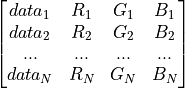
if str: colormap of plotted data chosen from included presets:
’Cool to Warm’,
’Cool to Warm (Extended)’,
’Blue to Red Rainbow’,
’X Ray’,
’Grayscale’,
’jet’,
’hsv’,
’erdc_iceFire_L’,
’Plasma (matplotlib)’,
’Viridis (matplotlib)’,
’gray_Matlab’,
’Spectral_lowBlue’,
’BuRd’
’Rainbow Blended White’
’b2rcw’
colormap_categories (boolean) – Use categorized (discrete) colormap
datarange (list [1 x 2]) – Minimum and Maximum of plotted datarange [MIN, MAX] (default: automatic)
domain_IDs (int or list of int) – Domain IDs
surface plot: Index of surface where the data is plotted on (Default: 0)
volume plot: Specify the domains IDs to show in plot (default: all) Attention! Has to be included in the dataset under the name ‘tissue’! e.g. for SimNIBS:
1 -> white matter (WM)
2 -> grey matter (GM)
3 -> cerebrospinal fluid (CSF)
4 -> skull
5 -> skin
domain_label (str) – Label of the dataset which contains the domain IDs (default: ‘tissue_type’)
edges (boolean) – Show edges of mesh (TRUE / FALSE)
fname_in (str or list of str) – Filenames of input files, 2 possibilities:
.xdmf-file: filename of .xmdf (needs the corresponding .hdf5 file(s) in the same folder)
.hdf5-file(s): filename(s) of .hdf5 file(s) containing the data and the geometry. The data can be provided in the first hdf5 file and the geometry can be provided in the second file. However, both can be also provided in a single hdf5 file.
fname_png (str) – Name of output .png file (incl. path)
fname_vtu_volume (str) – Name of .vtu volume file containing volume data (incl. path)
fname_vtu_surface (str) – Name of .vtu surface file containing surface data (incl. path) (to distinguish tissues)
fname_vtu_coil (str) – Name of coil .vtu file (incl. path) (optional)
info (str) – Information about the plot the settings are belonging to
interpolate (boolean) – Interpolate data for visual smoothness (TRUE / FALSE)
NanColor (list of float [3]) – RGB color values for “Not a Number” values (range 0 … 1)
opacitymap (nparray) – Points defining the piecewise linear opacity transfer function (transparency) (default: no transparency) connecting data values with opacity (alpha) values ranging from 0 (max. transparency) to 1 (no transparency)
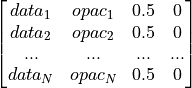
plot_function (str) – Function the plot is generated with:
’surface_vector_plot’
’surface_vector_plot_vtu’
’volume_plot’
’volume_plot_vtu’
png_resolution (float) – Resolution parameter of output image (1…5)
quantity (str) – Label of magnitude dataset to plot
surface_color (nparray [1 x 3]) – Color of brain surface in RGB (0…1) for better visability of tissue borders
surface_smoothing (bool) – Smooth the plotted surface (True/False)
show_coil (boolean) – show coil if present in dataset as block termed ‘coil’ (Default: True)
vcolor (nparray of float [N_vecs x 3]) – Array containing the RGB values between 0…1 of the vector groups in dataset to plot
vector_mode (dict) – dict key determines the type how many vectors are shown: - ‘All Points’ - ‘Every Nth Point’ - ‘Uniform Spatial Distribution’
dict value (int) is the corresponding number of vectors
’All Points’ (not set)
’Every Nth Point’ (every Nth vector is shown in the grid)
’Uniform Spatial Distribution’ (not set)
view (list) – Camera position and angle [[3 x CameraPosition], [3 x CameraFocalPoint], [3 x CameraViewUp], 1 x CameraParallelScale]
viewsize (nparray [1 x 2]) – Set size of exported image in pixel [width x height] will be extra scaled by parameter png_resolution
vlabels (list of str) – Labels of vector datasets to plot (other present datasets are ignored)
vscales (list of float) – Scale parameters of vector groups to plot
vscale_mode (list of str [N_vecs x 1]) – List containing the type of vector scaling:
’off’: all vectors are normalized
’vector’: vectors are scaled according to their magnitudeeee
- pynibs.para.crop_data_hdf5_to_datarange(ps)
Crops the data (quantity) in .hdf5 data file to datarange and overwrites the original .hdf5 data file pointed by the .xdmf file.
- pynibs.para.crop_image(fname_image, fname_image_cropped)
Remove surrounding empty space around an image. This implemenation assumes that the surrounding space has the same colour as the top leftmost pixel.
- Parameters
fname_image (str) – Filename of image to be cropped
- Returns
<File> – Cropped image file saved as “fname_image_cropped”
- Return type
.png file
- pynibs.para.surface_vector_plot(ps)
Generate plot with Paraview from data in .hdf5 file(s).
- Parameters
ps (dict) – Plot settings dict initialized with create_plot_settings_dict(plotfunction_type=’surface_vector_plot’)
- Returns
<File> – Generated plot
- Return type
.png file
- pynibs.para.surface_vector_plot_vtu(ps)
Generate plot with Paraview from data in .vtu file.
- Parameters
ps (dict) – Plot settings dict initialized with create_plot_settings_dict(plotfunction_type=’surface_vector_plot_vtu’)
- Returns
<File> – Generated plot
- Return type
.png file
- pynibs.para.volume_plot(ps)
Generate plot with Paraview from data in .hdf5 file.
- Parameters
ps (dict) – Plot settings dict initialized with create_plot_settings_dict(plotfunction_type=’’volume_plot’’)
- Returns
<File> – Generated plot
- Return type
.png file
- pynibs.para.volume_plot_vtu(ps)
Generate plot with Paraview from data in .vtu file.
- Parameters
ps (dict) – Plot settings dict initialized with create_plot_settings_dict(plotfunction_type=’’volume_plot_vtu’’)
- Returns
<File> – Generated plot
- Return type
.png file
- pynibs.para.write_vtu(fname, data_labels, points, connectivity, idx_start, data)
Writes data in tetrahedra centers into .vtu file, which can be loaded with Paraview.
- Parameters
fname (str) – Name of .vtu file (incl. path)
data_labels (list with N_data str) – Label of each dataset
points (array of float [N_points x 3]) – Coordinates of vertices
connectivity (array of int [N_tet x 4]) – Connectivity of points forming tetrahedra
idx_start (int) – Smallest index in connectivity matrix, defines offset w.r.t Python indexing, which starts at ‘0’
*data (array(s) [N_tet x N_comp(N_data)]) – Arrays containing data in tetrahedra center multiple components per dataset possible e.g. [Ex, Ey, Ez]
- Returns
<File> – Geometry and data information
- Return type
.vtu file
- pynibs.para.write_vtu_coilpos(fname_geo, fname_vtu)
Read dipole data of coil (position and magnitude of each dipole) from geo file and store it as vtu file.
- pynibs.para.write_vtu_mult(fname, data_labels, points, triangles, tetrahedras, idx_start, *data)
Writes data in triangles and tetrahedra centers into .vtu file, which can be loaded with Paraview.
- Parameters
fname (str) – Name of .vtu file (incl. path)
points (nparray of float [N_points x 3]) – Coordinates of vertices
triangles (nparray of int [N_tri x 3]) – Connectivity of points forming triangles
tetrahedras (nparray of int [N_tri x 4]) – Connectivity of points forming tetrahedra idx_start: int smallest index in connectivity matrix, defines offset w.r.t python indexing, which starts at ‘0’
*data (nparray(s) [N_tet x N_comp(N_data)]) – Arrays containing data in tetrahedra center multiple components per dataset possible e.g. [Ex, Ey, Ez]
- Returns
<File> – Geometry and data information
- Return type
.vtu file
pynibs.postproc module
- pynibs.postproc.congruence_factor_curveshift_kernel(e_curve, mep_curve)
Curve congruence (overlap) measure for multiple MEP curves per element. Determines the average displacement between the MEP curves. The congruence factor is weighted by median(E) and summed up. This favors elements which have greater E, as these are more likely to produce MEPs.
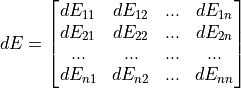
-> congruence_factor ~ np.linalg.norm(dE)/median(E)/n_cond/2
- Parameters
- Returns
congruence_factor – Congruence factor for the n_cond electric field and MEP curves
- Return type
- pynibs.postproc.congruence_factor_curveshift_workhorse(elm_idx_list, mep, mep_params, e, n_samples=100)
Worker function for congruence factor computation - call from multiprocessing.pool Calculates congruence factor for e = (E_mag, E_norm and/or E_tan) for given zaps and elements. The computations are parallelized in terms of element indices (elm_idx_list). n_samples are taken from fitted_mep, within the range of the mep object.
- Parameters
elm_idx_list (nparray [chunksize]) – List of element indices, the congruence factor is computed for
mep (list of Mep object instances [n_cond]) – List of fitted Mep object instances for all conditions (see exp.py for more information of Mep class)
mep_params (nparray of float [n_mep_params_total]) – List of all mep parameters of curve fits used to calculate the MEP (accumulated into one array) - e.g.: [mep_#1_para_#1, mep_#1_para_#2, mep_#1_para_#3, mep_#2_para_#1, mep_#2_para_#1, …]
e (list of list of nparray of float [n_cond][n_datasets][n_elm]) – Tuple of n_datasets of the electric field to compute the congruence factor for, e.g. (e_mag, e_norm, e_tan) Each dataset is a list over all conditions containing the electric field component of interest - len(e) = n_cond - len(e[0]) = n_comp (e.g: e_mag = e[0]))
n_samples (int, default=100) – Number of data points to generate discrete mep and e curves
- Returns
congruence_factor – Congruence factor in each element specified in elm_idx_list and for each input dataset
- Return type
nparray of float [n_roi, n_datasets]
- pynibs.postproc.congruence_factor_curveshift_workhorse_stretch_correction(elm_idx_list, mep, mep_params, e, n_samples=100)
Worker function for congruence factor computation - call from multiprocessing.pool Calculates congruence factor for e = (E_mag, E_norm and/or E_tan) for given zaps and elements. The computations are parallelized in terms of element indices (elm_idx_list). n_samples are taken from fitted_mep, within the range of the mep object.
- Parameters
elm_idx_list (nparray [chunksize]) – List of element indices, the congruence factor is computed for
mep (list of Mep object instances [n_cond]) – List of fitted Mep object instances for all conditions (see exp.py for more information of Mep class)
mep_params (nparray of float [n_mep_params_total]) – List of all mep parameters of curve fits used to calculate the MEP (accumulated into one array) - e.g.: [mep_#1_para_#1, mep_#1_para_#2, mep_#1_para_#3, mep_#2_para_#1, mep_#2_para_#1, …]
e (list of list of nparray of float [n_cond][n_datasets][n_elm]) – Tuple of n_datasets of the electric field to compute the congruence factor for, e.g. (e_mag, e_norm, e_tan) Each dataset is a list over all conditions containing the electric field component of interest - e.g.: len(e) = n_cond, - len(e[0]) = n_comp (e.g: e_mag = e[0]))
n_samples (int, default=100) – Number of data points to generate discrete mep and e curves
- Returns
congruence_factor – Congruence factor in each element specified in elm_idx_list and for each input dataset
- Return type
nparray of float [n_roi, n_datasets]
- pynibs.postproc.congruence_factor_curveshift_workhorse_stretch_correction_new(mep, mep_params, e, n_samples=100, ref_idx=0)
Worker function for congruence factor computation - call from multiprocessing.pool Calculates congruence factor for e = (E_mag, E_norm and/or E_tan) for given zaps and elements. The computations are parallelized in terms of element indices (elm_idx_list). n_samples are taken from fitted_mep, within the range of the mep object.
- Parameters
mep (list of Mep object instances [n_cond]) – List of fitted Mep object instances for all conditions (see exp.py for more information of Mep class)
mep_params (nparray of float [n_mep_params_total]) – List of all mep parameters of curve fits used to calculate the MEP (accumulated into one array) - e.g.: [mep_#1_para_#1, mep_#1_para_#2, mep_#1_para_#3, mep_#2_para_#1, mep_#2_para_#1, …]
e (nparray of float [n_elm x n_cond]) – Electric field in elements
n_samples (int, default=100) – Number of data points to generate discrete mep and e curves
- Returns
congruence_factor – Congruence factor in each element specified in elm_idx_list and for each input dataset
- Return type
nparray of float [n_elm x 1]
- pynibs.postproc.congruence_factor_curveshift_workhorse_stretch_correction_sign_new(mep, mep_params, e, n_samples=100, ref_idx=0)
Worker function for congruence factor computation - call from multiprocessing.pool Calculates congruence factor for e = (E_mag, E_norm and/or E_tan) for given zaps and elements. The computations are parallelized in terms of element indices (elm_idx_list). n_samples are taken from fitted_mep, within the range of the mep object.
- Parameters
mep (list of Mep object instances [n_cond]) – List of fitted Mep object instances for all conditions (see exp.py for more information of Mep class)
mep_params (nparray of float [n_mep_params_total]) – List of all mep parameters of curve fits used to calculate the MEP (accumulated into one array) - e.g.: [mep_#1_para_#1, mep_#1_para_#2, mep_#1_para_#3, mep_#2_para_#1, mep_#2_para_#1, …]
e (nparray of float [n_elm x n_cond]) – Electric field in elements
n_samples (int, default=100) – Number of data points to generate discrete mep and e curves
- Returns
congruence_factor – Congruence factor in each element specified in elm_idx_list and for each input dataset
- Return type
nparray of float [n_elm x 1]
- pynibs.postproc.congruence_factor_curveshift_workhorse_stretch_correction_variance(elm_idx_list, mep, mep_params, e, n_samples=100)
Worker function for congruence factor computation - call from multiprocessing.pool Calculates congruence factor for e = (E_mag, E_norm and/or E_tan) for given zaps and elements. The computations are parallelized in terms of element indices (elm_idx_list). n_samples are taken from fitted_mep, within the range of the mep object.
- Parameters
elm_idx_list (nparray [chunksize]) – List of element indices, the congruence factor is computed for
mep (list of Mep object instances [n_cond]) – List of fitted Mep object instances for all conditions (see exp.py for more information of Mep class)
mep_params (nparray of float [n_mep_params_total]) – List of all mep parameters of curve fits used to calculate the MEP (accumulated into one array) - e.g.: [mep_#1_para_#1, mep_#1_para_#2, mep_#1_para_#3, mep_#2_para_#1, mep_#2_para_#1, …]
e (list of list of nparray of float [n_cond][n_datasets][n_elm]) – Tuple of n_datasets of the electric field to compute the congruence factor for, e.g. (e_mag, e_norm, e_tan) Each dataset is a list over all conditions containing the electric field component of interest - e.g.: len(e) = n_cond - len(e[0]) = n_comp (e.g: e_mag = e[0]))
n_samples (int, default=100) – Number of data points to generate discrete mep and e curves
- Returns
congruence_factor – Congruence factor in each element specified in elm_idx_list and for each input dataset
- Return type
nparray of float [n_roi, n_datasets]
- pynibs.postproc.congruence_factor_variance_sign_workhorse(elm_idx_list, mep, mep_params, e)
Worker function for congruence factor computation - call from multiprocessing.pool Calculates congruence factor for e = (E_mag, E_norm and/or E_tan) for given zaps and elements.
- Parameters
elm_idx_list (nparray [chunksize]) – List of element indices, the congruence factor is computed for
mep (list of Mep object instances [n_cond]) – List of fitted Mep object instances for all conditions (see exp.py for more information of Mep class)
mep_params (nparray of float [n_mep_params_total]) – List of all mep parameters of curve fits used to calculate the MEP (accumulated into one array) (e.g.: [mep_#1_para_#1, mep_#1_para_#2, mep_#1_para_#3, mep_#2_para_#1, mep_#2_para_#1, …])
e (list of list of nparray of float [n_cond][n_datasets][n_elm]) – Tuple of n_datasets of the electric field to compute the congruence factor for, e.g. (e_mag, e_norm, e_tan) Each dataset is a list over all conditions containing the electric field component of interest - len(e) = n_cond - len(e[0]) = n_comp (e.g: e_mag = e[0]))
- Returns
congruence_factor – Congruence factor in each element specified in elm_idx_list and for each input dataset
- Return type
nparray of float [n_roi, n_datasets]
- pynibs.postproc.congruence_factor_variance_workhorse(elm_idx_list, mep, mep_params, e, old_style=True)
Worker function for congruence factor computation - call from multiprocessing.pool Calculates congruence factor for e = (E_mag, E_norm and/or E_tan) for given zaps and elements.
- Parameters
elm_idx_list (nparray [chunksize]) – List of element indices, the congruence factor is computed for
mep (list of Mep object instances [n_cond]) – List of fitted Mep object instances for all conditions (see exp.py for more information of Mep class)
mep_params (nparray of float [n_mep_params_total]) – List of all mep parameters of curve fits used to calculate the MEP (accumulated into one array) (e.g.: [mep_#1_para_#1, mep_#1_para_#2, mep_#1_para_#3, mep_#2_para_#1, mep_#2_para_#1, …])
e (list of list of nparray of float [n_cond][n_datasets][n_elm]) – Tuple of n_datasets of the electric field to compute the congruence factor for, e.g. (e_mag, e_norm, e_tan) Each dataset is a list over all conditions containing the electric field component of interest - len(e) = n_cond - len(e[0]) = n_comp (e.g: e_mag = e[0]))
old_style (boolean (default: True)) – True: Weight var(x_0_prime(r)) with mean(e(r) * mean(Stimulator Intensity), taken from MEP object False: Weight var(x_0_prime(r)) with mean(E(r)), taken from e
- Returns
congruence_factor – Congruence factor in each element specified in elm_idx_list and for each input dataset
- Return type
nparray of float [n_roi, n_datasets]
- pynibs.postproc.dvs_likelihood(params, x, y, verbose=True, normalize=False, bounds=[(1, 2), (1, 2)])
- pynibs.postproc.e_cog_workhorse(elm_idx_list, mep, mep_params, e)
Worker function for electric field center of gravity (e_cog) )computation after Opitz et al. (2013) [1] - call from multiprocessing.pool. Calculates the e_cog for e = (E_mag, E_norm and/or E_tan) for given zaps and elements. The electric field is weighted by the mean MEP amplitude (turning point of the sigmoid) and summed up. The computations are parallelized in terms of element indices (elm_idx_list).
- Parameters
elm_idx_list (nparray [chunksize]) – List of element indices, the congruence factor is computed for
mep (list of Mep object instances [n_cond]) – List of fitted Mep object instances for all conditions (see exp.py for more information of Mep class)
mep_params (nparray of float [n_mep_params_total]) – List of all mep parameters of curve fits used to calculate the MEP (accumulated into one array) (e.g.: [mep_#1_para_#1, mep_#1_para_#2, mep_#1_para_#3, mep_#2_para_#1, mep_#2_para_#1, …])
e (list of list of nparray of float [n_cond][n_datasets][n_elm]) – Tuple of n_datasets of the electric field to compute the congruence factor for, e.g. (e_mag, e_norm, e_tan) Each dataset is a list over all conditions containing the electric field component of interest - e.g.: len(e) = n_cond - len(e[0]) = n_comp (e.g: e_mag = e[0]))
- Returns
e_cog – RSD inverse in each element specified in elm_idx_list and for each input dataset
- Return type
nparray of float [n_roi, n_datasets]
Notes
- 1
Opitz, A., Legon, W., Rowlands, A., Bickel, W. K., Paulus, W., & Tyler, W. J. (2013). Physiological observations validate finite element models for estimating subject-specific electric field distributions induced by transcranial magnetic stimulation of the human motor cortex. Neuroimage, 81, 253-264.
- pynibs.postproc.e_focal_workhorse(elm_idx_list, e)
Worker function to determine the site of stimulation after Aonuma et al. (2018) [1] - call from multiprocessing.pool Calculates the site of stimulation for e = (E_mag, E_norm and/or E_tan) for given zaps and elements by multiplying the electric fields with each other. The computations are parallelized in terms of element indices (elm_idx_list).
- Parameters
elm_idx_list (nparray [chunksize]) – List of element indices, the congruence factor is computed for
e (list of list of nparray of float [n_cond][n_datasets][n_elm]) – Tuple of n_datasets of the electric field to compute the congruence factor for, e.g. (e_mag, e_norm, e_tan) Each dataset is a list over all conditions containing the electric field component of interest - e.g.: len(e) = n_cond - len(e[0]) = n_comp (e.g: e_mag = e[0]))
- Returns
e_focal – Focal electric field in each element specified in elm_idx_list and for each input dataset
- Return type
nparray of float [n_roi, n_datasets]
Notes
- 1
Aonuma, S., Gomez-Tames, J., Laakso, I., Hirata, A., Takakura, T., Tamura, M., & Muragaki, Y. (2018). A high-resolution computational localization method for transcranial magnetic stimulation mapping. NeuroImage, 172, 85-93.
- pynibs.postproc.extract_condition_combination(fn_config_cfg, fn_results_hdf5, conds, fn_out_prefix)
Extract and plot congruence factor results for specific condition combinations from permutation analysis.
- Parameters
fn_config_cfg (str) – Filename of config file the permutation study was cinducted with (e.g. …/probands/29965.48/results/electric_field/22_cond_coil_corrected/5-of-22_cond_coil_corrected_Weise.cfg
fn_results_hdf5 (str) – Filename of results file generated by 00_run_c_standard_compute_all_permutations.py containing congruence factors and condition combinations. (e.g. /data/pt_01756/probands/29965.48/results/congruence_factor/22_cond_coil_corrected/2_of_20_cond/ simulations/results.hdf5)
conds (list of str [n_cond]) – List containing condition combinations to extract and plot. (e.g. [‘P_0’, ‘I_225’, ‘M1_0’, ‘I_675’, ‘P_225’])
fn_out_prefix (str) – Prefix of output filenames of *_data.xdmf, *_data.hdf5 and *_geo.hdf5
- Returns
- pynibs.postproc.rsd_inverse_workhorse(elm_idx_list, mep, e)
Worker function for RSD inverse computation after Bungert et al. (2017) [1]- call from multiprocessing.pool Calculates the RSD inverse for e = (E_mag, E_norm and/or E_tan) for given zaps and elements. The computations are parallelized in terms of element indices (elm_idx_list).
- Parameters
elm_idx_list (nparray [chunksize]) – List of element indices, the congruence factor is computed for
mep (list of Mep object instances [n_cond]) – List of fitted Mep object instances for all conditions (see exp.py for more information of Mep class)
e (list of list of nparray of float [n_cond][n_datasets][n_elm]) – Tuple of n_datasets of the electric field to compute the congruence factor for, e.g. (e_mag, e_norm, e_tan) Each dataset is a list over all conditions containing the electric field component of interest - e.g.: len(e) = n_cond - len(e[0]) = n_comp (e.g: e_mag = e[0]))
- Returns
rsd_inv – RSD inverse in each element specified in elm_idx_list and for each input dataset
- Return type
nparray of float [n_roi, n_datasets]
Notes
- 1
Bungert, A., Antunes, A., Espenhahn, S., & Thielscher, A. (2016). Where does TMS stimulate the motor cortex? Combining electrophysiological measurements and realistic field estimates to reveal the affected cortex position. Cerebral Cortex, 27(11), 5083-5094.
- pynibs.postproc.single_fit(x, y, fun)
Performs a single fit and returns fit object
- pynibs.postproc.stimulation_threshold(elm_idx_list, mep, mep_params, n_samples, e, c_factor_percentile=95, mep_threshold=0.5, c_factor=None, c_function=None, t_function=None)
Computes the stimulation threshold in terms of the electric field in [V/m]. The threshold is defined as the electric field value where the mep exceeds mep_threshold. The average value is taken over all mep curves in each condition and over an area where the congruence factor exceeds c_factor_percentile.
- Parameters
elm_idx_list (nparray [chunksize]) – List of element indices, the congruence factor is computed for
mep (list of Mep object instances [n_cond]) – List of fitted Mep object instances for all conditions (see exp.py for more information of Mep class)
mep_params (nparray of float [n_mep_params_total]) – List of all mep parameters of curve fits used to calculate the MEP (accumulated into one array) (e.g.: [mep_#1_para_#1, mep_#1_para_#2, mep_#1_para_#3, mep_#2_para_#1, mep_#2_para_#1, …])
n_samples (int) – Number of data points to generate discrete mep and e curves
e (list of list of nparray of float [n_cond][n_datasets][n_elm]) – Tuple of n_datasets of the electric field to compute the congruence factor for, e.g. (e_mag, e_norm, e_tan) Each dataset is a list over all conditions containing the electric field component of interest - len(e) = n_cond - len(e[0]) = n_comp (e.g: e_mag = e[0]))
c_factor_percentile (float) – Percentile of the c_factor taken into account for the threshold evaluation. Only c_factors are considered exceeding this.
mep_threshold (float) – MEP value in [mV], which has to be exceeded for threshold definition
c_factor (nparray of float [n_roi, n_datasets]) – Congruence factor in each element specified in elm_idx_list and for each input dataset
c_function (fun) –
Defines the function to use during c_gpc to calculate the congruence factor - congruence_factor_curveshift_workhorse: determines the average curve shift (without stretch correction) - congruence_factor_curveshift_workhorse_stretch_correction: determines the average curve shift
(with stretch correction)
congruence_factor_curveshift_workhorse_stretch_correction_variance: determines the average curve shift (with stretch correction and variance)
congruence_factor_variance_workhorse: evaluates the variance of the shifting and stretching parameters
t_function (fun) –
Defines the function to determine the stimulation_threshold - stimulation_threshold_mean_mep_threshold: uses mep_threshold to determine the corresponding e_threshold over all conditions and takes the average values as the stimulation threshold - stimulation_threshold_pynibs.sigmoid: Fits a new pynibs.sigmoid using all datapoints in the mep-vs-E space and
evaluates the threshold from the turning point or the intersection of the derivative in the crossing point with the e-axis
- Returns
stim_threshold_avg – Average stimulation threshold in [V/m] where c_factor is greater than c_factor_percentile
- Return type
- pynibs.postproc.stimulation_threshold_intensity(mep_curve, intensities, mep_threshold)
Determines the stimulation threshold of one particular condition (usually the most sensitive e.g. M1-45). The stimulation threshold is the stimulator intensity value in [A/us] where the mep curves exceed the value of mep_threshold (in [mV]).
- Parameters
mep_curve (list [1] of nparray of float [n_samples]) – MEP curve values for every conditions
intensities (list [1] of nparray of float [n_samples]) – To the MEP values corresponding stimulator intensities in [A/us]
mep_threshold (float) – MEP value in [mV], which has to be exceeded for threshold definition
- Returns
stim_threshold_avg – Average stimulation threshold in [V/m] where c_factor is greater than c_factor_percentile
- Return type
- pynibs.postproc.stimulation_threshold_mean_mep_threshold(elm_idx, mep_curve, intensities, e, mep_threshold)
Determines the stimulation threshold by calculating the average electric field over all conditions, where the mep curves exceed the value of mep_threshold (in [mV]).
- Parameters
elm_idx (list [n_datasets] of nparray of int [n_elements]) – Element indices where the congruence factor exceeds a certain percentile (defined during the call of stimulation_threshold())
mep_curve (list [n_conditions] of nparray of float [n_samples]) – MEP values for every conditions
intensities (list [n_conditions] of nparray of float [n_samples]) – To the MEP values corresponding stimulator intensities in [A/us]
e (list of list of nparray of float [n_cond][n_datasets][n_elm]) – Tuple of n_datasets of the electric field to compute the congruence factor for, e.g. (e_mag, e_norm, e_tan) Each dataset is a list over all conditions containing the electric field component of interest - len(e) = n_cond - len(e[0]) = n_comp (e.g: e_mag = e[0]))
mep_threshold (float) – MEP value in [mV], which has to be exceeded for threshold definition
- Returns
stim_threshold_avg – Average stimulation threshold in [V/m] where c_factor is greater than c_factor_percentile
- Return type
- pynibs.postproc.stimulation_threshold_sigmoid(elm_idx, mep_curve, intensities, e, mep_threshold)
Determines the stimulation threshold by calculating an equivalent pynibs.sigmoid over all conditions. The stimulation threshold is the electric field value where the mep curves exceed the value of mep_threshold (in [mV]).
- Parameters
elm_idx (list [n_datasets] of nparray of int [n_elements]) – Element indices where the congruence factor exceeds a certain percentile (defined during the call of stimulation_threshold())
mep_curve (list [n_conditions] of nparray of float [n_samples]) – MEP curve values for every conditions
intensities (list [n_conditions] of nparray of float [n_samples]) – To the MEP values corresponding stimulator intensities in [A/us]
e (list of list of nparray of float [n_cond][n_datasets][n_elm]) – Tuple of n_datasets of the electric field to compute the congruence factor for, e.g. (e_mag, e_norm, e_tan) Each dataset is a list over all conditions containing the electric field component of interest - len(e) = n_cond - len(e[0]) = n_comp (e.g: e_mag = e[0]))
mep_threshold (float) – MEP value in [mV], which has to be exceeded for threshold definition
- Returns
stim_threshold_avg – Average stimulation threshold in [V/m] where c_factor is greater than c_factor_percentile
- Return type
pynibs.roi module
- class pynibs.roi.RegionOfInterestSurface
Bases:
objectRegion of interest (surface)
- node_coord_up
(N_points, 3) Coordinates (x,y,z) of upper surface nodes
- Type
np.ndarray
- node_coord_mid
(N_points, 3) Coordinates (x,y,z) of middle surface nodes
- Type
np.ndarray
- node_coord_low
(N_points, 3) Coordinates (x,y,z) of lower surface nodes
- Type
np.ndarray
- node_number_list
(N_points, 3) Connectivity matrix of triangles
- Type
np.ndarray
- tet_idx_tri_center_up
Tetrahedra indices of TetrahedraLinear object instance where the center points of the triangles of the upper surface are lying in
- Type
np.ndarray [N_points]
- tet_idx_tri_center_mid
Tetrahedra indices of TetrahedraLinear object instance where the center points of the triangles of the middle surface are lying in
- Type
np.ndarray [N_points]
- tet_idx_tri_center_low
Tetrahedra indices of TetrahedraLinear object instance where the center points of the triangles of the lower surface are lying in
- Type
np.ndarray [N_points]
- tet_idx_node_coord_mid
(N_tri,) Tetrahedra indices of TetrahedraLinear object instance where the nodes of the middle surface are lying in
- Type
np.ndarray
- tri_center_coord_up
(N_tri, 3) Coordinates of roi triangle center of upper surface
- Type
np.ndarray
- tri_center_coord_mid
(N_tri, 3) Coordinates of roi triangle center of middle surface
- Type
np.ndarray
- tri_center_coord_low
(N_tri, 3) Coordinates of roi triangle center of lower surface
- Type
np.ndarray
- fn_mask
Filename for surface mask in subject space. .mgh file or freesurfer surface file.
- Type
string
- fn_mask_avg
Filename for .mgh mask in fsaverage space. Absolute path or relative to mesh folder.
- Type
string
- fn_mask_nii
Filename for .nii or .nii.gz mask. Absolute path or relative to mesh folder.
- Type
string
- X_ROI
Region of interest [Xmin, Xmax], whole X range if empty [0,0] or None (left - right)
- Y_ROI
Region of interest [Ymin, Ymax], whole Y range if empty [0,0] or None (anterior - posterior)
- Z_ROI
Region of interest [Zmin, Zmax], whole Z range if empty [0,0] or None (inferior - superior)
- gm_surf_fname
Filename(s) of GM surface generated by freesurfer (lh and/or rh) (e.g. in mri2msh: …/fs_ID/surf/lh.pial)
- wm_surf_fname
Filename(s) of WM surface generated by freesurfer (lh and/or rh) (e.g. in mri2msh: …/fs_ID/surf/lh.white)
- layer
Define the number of layers: - 1: one layer - 3: additionally upper and lower layers are generated around the central midlayer
- Type
Notes
Initialization:
roi = RegionOfInterestSurface()
Methods
Determines tetrahedra indices of msh where the triangle center points of upper, middle and lower surface and the nodes of middle surface are lying in.
make_GM_WM_surface([gm_surf_fname, ...])Generating a surface between WM and GM in a distance of delta 0...1 for ROI, given by Freesurfer mask or coordinates.
project_on_midlayer(target[, verbose])Project a coordinate on the nearest midlayer node
subsample([dist, fn_sphere])Subsample ROI surface and return element indices
- determine_element_idx_in_mesh(msh)
Determines tetrahedra indices of msh where the triangle center points of upper, middle and lower surface and the nodes of middle surface are lying in.
- Parameters
msh (pynibs.TetrahedraLinear) – Object instance of TetrahedraLinear class
- Returns
RegionOfInterestSurface.tet_idx_tri_center_up (np.ndarray [N_points]) – Tetrahedra indices of TetrahedraLinear object instance where the center points of the triangles of the upper surface are lying in
RegionOfInterestSurface.tet_idx_tri_center_mid (np.ndarray [N_points]) – Tetrahedra indices of TetrahedraLinear object instance where the center points of the triangles of the middle surface are lying in
RegionOfInterestSurface.tet_idx_tri_center_low (np.ndarray [N_points]) – Tetrahedra indices of TetrahedraLinear object instance where the center points of the triangles of the lower surface are lying in
RegionOfInterestSurface.tet_idx_node_coord_mid (np.ndarray [N_tri]) – Tetrahedra indices of TetrahedraLinear object instance where the nodes of the middle surface are lying in
- make_GM_WM_surface(gm_surf_fname=None, wm_surf_fname=None, midlayer_surf_fname=None, mesh_folder=None, delta=0.5, x_roi=None, y_roi=None, z_roi=None, layer=1, fn_mask=None, refine=False)
Generating a surface between WM and GM in a distance of delta 0…1 for ROI, given by Freesurfer mask or coordinates.
- Parameters
gm_surf_fname (str or list of str) – Filename(s) of GM FreeSurfer surface(s) (lh and/or rh). Either relative to mesh_folder (fs_ID/surf/lh.pial) or absolute (/full/path/to/lh.pial)
wm_surf_fname (str or list of str) – Filename(s) of WM FreeSurfer surface(s) (lh and/or rh) Either relative to mesh_folder (fs_ID/surf/lh.white) or absolute (/full/path/to/lh.white)
midlayer_surf_fname (str or list of str) – Filename(s) of midlayer surface (lh and/or rh) Either relative to mesh_folder (fs_ID/surf/lh.central) or absolute (/full/path/to/lh.central)
mesh_folder (str) – Root folder of mesh, Needed if paths above are given relative, or refine=True
m2m_mat_fname ([defunct]) – Filename of mri2msh transformation matrix (e.g. in mri2msh: …/m2m_ProbandID/MNI2conform_6DOF.mat)
delta (float) – Distance parameter where surface is generated 0…1 (default: 0.5) - 0 -> WM surface - 1 -> GM surface
x_roi (list of float) – Region of interest [Xmin, Xmax], whole X range if empty [0,0] or None (left - right)
y_roi (list of float) – Region of interest [Ymin, Ymax], whole Y range if empty [0,0] or None (anterior - posterior)
z_roi (list of float) – Region of interest [Zmin, Zmax], whole Z range if empty [0,0] or None (inferior - superior)
layer (int) – Define the number of layers: - 1: one layer - 3: additionally upper and lower layers are generated around the central midlayer
fn_mask (str) – Filename for FreeSurfer .mgh mask.
refine (bool, optional, default: False) – Refine ROI by splitting elements
- Returns
node_coord_up (np.ndarray of float [N_roi_points x 3]) – Node coordinates (x, y, z) of upper epsilon layer of ROI surface
node_coord_mid (np.ndarray of float [N_roi_points x 3]) – Node coordinates (x, y, z) of ROI surface
node_coord_low (np.ndarray of float [N_roi_points x 3]) – Node coordinates (x, y, z) of lower epsilon layer of ROI surface
node_number_list (np.ndarray of int [N_roi_tri x 3]) – Connectivity matrix of intermediate surface layer triangles
delta (float) – Distance parameter where surface is generated 0…1 (default: 0.5) - 0 -> WM surface - 1 -> GM surface
tri_center_coord_up (np.ndarray of float [N_roi_tri x 3]) – Coordinates (x, y, z) of triangle center of upper epsilon layer of ROI surface
tri_center_coord_mid (np.ndarray of float [N_roi_tri x 3]) – Coordinates (x, y, z) of triangle center of ROI surface
tri_center_coord_low (np.ndarray of float [N_roi_tri x 3]) – Coordinates (x, y, z) of triangle center of lower epsilon layer of ROI surface
fn_mask (str) – Filename for freesurfer mask. If given, this is used instead of *_ROIs
X_ROI (list of float) – Region of interest [Xmin, Xmax], whole X range if empty [0,0] or None (left - right)
Y_ROI (list of float) – Region of interest [Ymin, Ymax], whole Y range if empty [0,0] or None (anterior - posterior)
Z_ROI (list of float) – Region of interest [Zmin, Zmax], whole Z range if empty [0,0] or None (inferior - superior)
Example
make_GM_WM_surface(self, gm_surf_fname, wm_surf_fname, delta, X_ROI, Y_ROI, Z_ROI) make_GM_WM_surface(self, gm_surf_fname, wm_surf_fname, delta, mask_fn, layer=3)
- project_on_midlayer(target, verbose=False)
Project a coordinate on the nearest midlayer node
- Parameters
target (np.ndarray) – Coordinate to project as (3,) array
verbose (bool) – Print some verbosity information. Default: False
- Returns
target_proj – Node coordinate of nearest midlayer node.
- Return type
np.ndarray
- subsample(dist=10, fn_sphere='')
Subsample ROI surface and return element indices
- class pynibs.roi.RegionOfInterestVolume
Bases:
objectRegion of interest (volume) class
- node_coord
Coordinates (x,y,z) of ROI tetrahedra nodes
- Type
np.ndarray [N_points x 3]
- tet_node_number_list
Connectivity matrix of ROI tetrahedra
- Type
np.ndarray [N_tet_roi x 3]
- tri_node_number_list
Connectivity matrix of ROI tetrahedra
- Type
np.ndarray [N_tri_roi x 3]
- tet_idx_node_coord
Tetrahedra indices of TetrahedraLinear object instance where the ROI nodes are lying in
- Type
np.ndarray [N_points]
- tet_idx_tetrahedra_center
Tetrahedra indices of TetrahedraLinear object instance where the center points of the ROI tetrahedra are lying in
- Type
np.ndarray [N_tet_roi]
- tet_idx_triangle_center
Tetrahedra indices of TetrahedraLinear object instance where the center points of the ROI triangle are lying in. If the ROI is directly generated from the msh instance using “make_roi_volume_from_msh”, these indices are the triangle indices of the head mesh since the ROI mesh and the head mesh are overlapping. If the ROI mesh is not the same as the head mesh, the triangle center of the ROI mesh are always lying in a tetrahedra of the head mesh (these indices are given in this case)
- Type
np.ndarray [N_tri_roi]
Methods
make_roi_volume_from_msh(msh[, volume_type, ...])Generate region of interest (volume) and extract nodes, triangles and tetrahedra from msh instance.
- make_roi_volume_from_msh(msh, volume_type='box', x_roi=None, y_roi=None, z_roi=None)
Generate region of interest (volume) and extract nodes, triangles and tetrahedra from msh instance.
- Parameters
msh (pynibs.TetrahedraLinear) – Mesh object instance of type TetrahedraLinear (see main.py)
volume_type (str) – Type of ROI (‘box’ or ‘sphere’)
type = ‘box’: [Xmin, Xmax] (in mm), whole X range if empty [0,0] or None (left - right)
type = ‘sphere’: origin [x,y,z]
type = ‘box’: [Ymin, Ymax] (in mm), whole Y range if empty [0,0] or None (anterior - posterior)
type = ‘sphere’: radius (in mm)
type = ‘box’: [Zmin, Zmax] (in mm), whole Z range if empty [0,0] or None (inferior - superior)
type = ‘sphere’: None
- Returns
RegionOfInterestVolume.node_coord (np.ndarray [N_points x 3]) – Coordinates (x,y,z) of ROI tetrahedra nodes
RegionOfInterestVolume.tet_node_number_list (np.ndarray [N_tet_roi x 3]) – Connectivity matrix of ROI tetrahedra
RegionOfInterestVolume.tri_node_number_list (np.ndarray [N_tri_roi x 3]) – Connectivity matrix of ROI tetrahedra
RegionOfInterestVolume.tet_idx_node_coord (np.ndarray [N_points]) – Tetrahedra indices of TetrahedraLinear object instance where the ROI nodes are lying in
RegionOfInterestVolume.tet_idx_tetrahedra_center (np.ndarray [N_tet_roi]) – Tetrahedra indices of TetrahedraLinear object instance where the center points of the ROI tetrahedra are lying in
RegionOfInterestVolume.tet_idx_triangle_center (np.ndarray [N_tri_roi]) – Tetrahedra indices of TetrahedraLinear object instance where the center points of the ROI triangle are lying in. If the ROI is directly generated from the msh instance using “make_roi_volume_from_msh”, these indices are the triangle indices of the head mesh since the ROI mesh and the head mesh are overlapping. If the ROI mesh is not the same as the head mesh, the triangle center of the ROI mesh are always lying in a tetrahedra of the head mesh (these indices are given in this case)
- pynibs.roi.clean_roi(img, vox_thres=0.5, fn_out=None)
Remove values < vox thres from image.
- pynibs.roi.create_refine_spherical_roi(center, radius, final_tissues_nii, out_fn, target_size=0.5, outside_size=None, outside_factor=3, out_spher_fn=None, tissue_types=None, verbose=False)
Create a spherical roi nifti for simnibs 4 refinement. Only tissue types accoring to _tissue_types will be refined.
Use the resulting output file as input for –sizing_field in SimNIBS-4/simnibs/cli/meshmesh.py
- pynibs.roi.determine_element_idx_in_mesh(fname, msh, points, compute_baricentric=False)
Finds the tetrahedron that contains each of the described points using a stochastic walk algorithm.
- Parameters
msh (pynibs.TetrahedraLinear) –
fname (str or None) – Filename of saved .txt file containing the element indices (no data is saved when fname=None or fname=’’)
points (np.ndarray (N, 3) or list of np.ndarray) – List of points to be queried
compute_baricentric (bool) – Wether or not to compute baricentric coordinates of the points
- Returns
th_with_points (np.ndarray) – List with the tetrahedron that contains each point. If the point is outside the mesh, the value will be -1
baricentric (np.ndarray [n, 4](if compute_baricentric == True)) – Baricentric coordinates of point. If the point is outside, a list of zeros
Notes
- 1
Devillers, Olivier, Sylvain Pion, and Monique Teillaud. “Walking in a triangulation.” International Journal of Foundations of Computer Science 13.02 (2002): 181-199.
- pynibs.roi.elem_workhorse(chunk, points_out, P1_all, P2_all, P3_all, P4_all, N_points_total, N_CPU)
- Parameters
chunk (np.ndarray) – Indices of points the CPU thread is computing the element indices for
points_out (np.ndarray of float) – (N_points, 3) Coordinates of points, the tetrahedra indices are computed for
P1_all (np.ndarray of float) –
(N_tet –
tetrahedra (3) Coordinates of first point of) –
P2_all (np.ndarray of float) – (N_tet, 3) Coordinates of second point of tetrahedra
P3_all (np.ndarray of float) – (N_tet, 3) Coordinates of third point of tetrahedra
P4_all (np.ndarray of float) – (N_tet, 3) Coordinates of fourth point of tetrahedra
N_points_total (int) – Total number of points
N_CPU (int) – Number of CPU cores to use
- Returns
tet_idx_local
- Return type
np.ndarray of int (N_points,)
- pynibs.roi.get_mask(areas, fn_annot, fn_inflated_fs, fn_out)
Determine freesurfer average mask .overlay file, which is needed to generate subject specific ROIs.
- Parameters
areas (list of str) – Brodmann areas (e.g. [‘Brodmann.6’, ‘Brodmann.4’, ‘Brodmann.3’, ‘Brodmann.1’])
fn_annot (str) – Annotation file of freesurfer (e.g. ‘FREESURFER_DIR/fsaverage/label/lh.PALS_B12_Brodmann.annot’)
fn_inflated_fs (str) – Inflated surface of freesurfer average (e.g. ‘FREESURFER_DIR/fsaverage/surf/lh.inflated’)
fn_out (str) – Filename of .overlay file of freesurfer mask
- Returns
<File> – fn_out.overlay file of freesurfer mask
- Return type
.overlay file
- pynibs.roi.get_sphere_in_nii(center, radius, nii=None, out_fn=None, thresh_by_nii=True, val_in=1, val_out=0, outside_val=0, outside_radius=inf)
Computes a spherical ROI for a given Nifti image (defaults to SimNIBS MNI T1 tissue). The ROI area is defined in nifti coordinates. By default, everything inside the ROI is set to 1, areas outside = 0. The ROI is further thresholded by the nifti. A nib.Nifti image is returned and optionally saved.
- Parameters
center (array-like) – X, Y, Z coordinates in nifti space
radius (float) – radius of sphere
nii (string or nib.nifti1.Nifti1Image, optional) – The nifti image to work with.
out_fn (string, optional) – If provided, sphere ROI image is saved here
outside_val (float, default = None) – Value outside of outside_radius.
outside_radius (float, default = None) – Distance factor to define the ‘outside’ area: oudsidefactor * radius -> outside
thresh_by_nii (bool, optional) – Mask sphere by nii != 0
val_in (float, optional) – Value within ROI
val_out (float, optional) – Value outside ROI
- Returns
sphere_img (nib.nifti1.Nifti1Image)
sphere_img (<file>, optional)
- Raises
ValueError – If the final ROI is empty.
- pynibs.roi.load_roi_surface_obj_from_hdf5(fname)
Loading and initializing RegionOfInterestSurface object from .hdf5 mesh file.
- pynibs.roi.make_GM_WM_surface(gm_surf_fname, wm_surf_fname, mesh_folder, midlayer_surf_fname=None, delta=0.5, x_roi=None, y_roi=None, z_roi=None, layer=1, fn_mask=None, refine=False)
Generating a surface between WM and GM in a distance of delta 0…1 for ROI, given by freesurfer mask or coordinates.
- Parameters
gm_surf_fname (str or list of str) – Filename(s) of GM surface generated by freesurfer (lh and/or rh) (e.g. in mri2msh: fs_ID/surf/lh.pial)
wm_surf_fname (str or list of str) – Filename(s) of WM surface generated by freesurfer (lh and/or rh) (e.g. in mri2msh: fs_ID/surf/lh.white)
mesh_folder (str) – Path of mesh (parent directory)
midlayer_surf_fname (str or list of str) – filename(s) of midlayer surface generated by headreco (lh and/or rh) (e.g. in headreco: fs_ID/surf/lh.central) (after conversion)
m2m_mat_fname ([defunct]) – Filename of mri2msh transformation matrix (e.g. in mri2msh: m2m_ProbandID/MNI2conform_6DOF.mat)
delta (float) – Distance parameter where surface is generated 0…1 (default: 0.5) - 0 -> WM surface - 1 -> GM surface
x_roi (list of float or None) – Region of interest [Xmin, Xmax], whole X range if empty [0,0] or None (left - right)
y_roi (list of float or None) – Region of interest [Ymin, Ymax], whole Y range if empty [0,0] or None (anterior - posterior)
z_roi (list of float or None) – Region of interest [Zmin, Zmax], whole Z range if empty [0,0] or None (inferior - superior)
layer (int) –
Define the number of layers:
1: one layer
3: additionally upper and lower layers are generated around the central midlayer
fn_mask (string or None) – Filename for freesurfer mask. If given, this is used instead of *_ROIs
refine (bool, optional, default: False) – Refine ROI by splitting elements
- Returns
if layer == 3 –
- surface_points_uppernp.ndarray of float
(N_points, 3) Coordinates (x, y, z) of surface + epsilon (in GM surface direction)
- surface_points_middlenp.ndarray of float
(N_points, 3) Coordinates (x, y, z) of surface
- surface_points_lowernp.ndarray of float
(N_points, 3) Coordinates (x, y, z) of surface - epsilon (in WM surface direction)
- connectivitynp.ndarray of int
(N_tri x 3) Connectivity of triangles (indexation starts at 0!)
else –
- surface_points_middlenp.ndarray of float
(N_points, 3) Coordinates (x, y, z) of surface
- connectivitynp.ndarray of int
(N_tri x 3) Connectivity of triangles (indexation starts at 0!)
Example
make_GM_WM_surface(self, gm_surf_fname, wm_surf_fname, delta, X_ROI, Y_ROI, Z_ROI) make_GM_WM_surface(self, gm_surf_fname, wm_surf_fname, delta, mask_fn, layer=3)
- pynibs.roi.nii2msh(mesh, m2m_dir, nii, out_folder, hem, out_fsaverage=False, roi_name='ROI')
Transform a nifti ROI image to subject space .mgh file.
pynibs.subject module
- class pynibs.subject.Subject(subject_id, subject_folder)
Bases:
objectSubject containing subject specific information, like mesh, roi, uncertainties, plot settings.
Notes
Initialization
sub = subject(subject_ID, mesh)
Parameters
- idstr
Subject id
- fn_meshstr
.msh or .hdf5 file containing the mesh information
Subject.seg, segmentation information dictionary
- fn_lh_wmstr
Filename of left hemisphere white matter surface
- fn_rh_wmstr
Filename of right hemisphere white matter surface
- fn_lh_gmstr
Filename of left hemisphere grey matter surface
- fn_rh_gmstr
Filename of right hemisphere grey matter surface
- fn_lh_curvstr
Filename of left hemisphere curvature data on grey matter surface
- fn_rh_curvstr
Filename of right hemisphere curvature data on grey matter surface
Subject.mri, mri information dictionary
- fn_mri_T1str
Filename of T1 image
- fn_mri_T2str
Filename of T2 image
- fn_mri_DTIstr
Filename of DTI dataset
- fn_mri_DTI_bvecstr
Filename of DTI bvec file
- fn_mri_DTI_bvalstr
Filename of DTI bval file
- fn_mri_conformstr
Filename of conform T1 image resulting from SimNIBS mri2mesh function
Subject.ps, plot settings dictionary
see plot functions in para.py for more details
Subject.exp, experiment dictionary
- infostr
General information about the experiment
- datestr
Date of experiment (e.g. 01/01/2018)
- fn_tms_navstr
Path to TMS navigator folder
- fn_datastr
Path to data folder or files
- fn_exp_csvstr
Filename of experimental data .csv file containing the merged experimental data information
- fn_coilstr
Filename of .ccd or .nii file of coil used in the experiment (contains ID)
- fn_mri_niistr
Filename of MRI .nii file used during the experiment
- condstr or list of str
Conditions in the experiment in the recorded order (e.g. [‘PA-45’, ‘PP-00’])
- experimenterstr
Name of experimenter who conducted the experiment
- incidentsstr
Description of special events occured during the experiment
Subject.mesh, mesh dictionary
- infostr
Information about the mesh (e.g. dicretization etc)
- fn_mesh_mshstr
Filename of the .msh file containing the FEM mesh
- fn_mesh_hdf5str
Filename of the .hdf5 file containing the FEM mesh
- seg_idxint
Index indicating to which segmentation dictionary the mesh belongs
Subject.roi region of interest dictionary
- typestr
Specify type of ROI (‘surface’, ‘volume’)
- infostr
Info about the region of interest, e.g. “M1 midlayer from freesurfer mask xyz”
- regionlist of str or float
Filename for freesurfer mask or [[X_min, X_max], [Y_min, Y_max], [Z_min, Z_max]]
- deltafloat
Distance parameter between WM and GM (0 -> WM, 1 -> GM) (for surfaces only)
Methods
add_experiment_info(exp_dict)Adding information about a particular experiment.
add_mesh_info(mesh_dict)Adding filename information of the mesh to the subject object (multiple filenames possible).
add_mri_info(mri_dict)Adding MRI information to the subject object (multiple MRIs possible).
add_plotsettings(ps_dict)Adding ROI information to the subject object (multiple ROIs possible).
add_roi_info(roi_dict)Adding ROI (surface) information of the mesh with mesh_index to the subject object (multiple ROIs possible).
- add_experiment_info(exp_dict)
Adding information about a particular experiment.
- Parameters
exp_dict (dict of dict or list of dict) – Dictionary containing information about the experiment
Notes
Adds Attributes
- explist of dict
Dictionary containing information about the experiment
- add_mesh_info(mesh_dict)
Adding filename information of the mesh to the subject object (multiple filenames possible).
- Parameters
mesh_dict (dictionary or list of dictionaries) – Dictionary containing the mesh information
Notes
Adds Attributes
- Subject.meshlist of dict
Dictionaries containing the mesh information
- add_mri_info(mri_dict)
Adding MRI information to the subject object (multiple MRIs possible).
- Parameters
mri_dict (dictionary or list of dictionaries) – Dictionary containing the MRI information of the subject
Notes
Adds Attributes
- Subject.mrilist of dict
Dictionary containing the MRI information of the subject
- add_plotsettings(ps_dict)
Adding ROI information to the subject object (multiple ROIs possible).
- Parameters
ps_dict (dictionary or list of dictionaries) – Dictionary containing plot settings of the subject
Notes
Adds Attributes
- Subject.pslist of dict
Dictionary containing plot settings of the subject
- add_roi_info(roi_dict)
Adding ROI (surface) information of the mesh with mesh_index to the subject object (multiple ROIs possible).
- Parameters
roi_dict (dict of dict or list of dictionaries) – Dictionary containing the ROI information of the mesh with mesh_index [mesh_idx][roi_idx]
Notes
Adds Attributes
- Subject.mesh[mesh_index].roilist of dict
Dictionaries containing ROI information
- pynibs.subject.check_file_and_format(fname)
Checking existence of file and transforming to list if necessary.
- pynibs.subject.fill_from_dict(obj, d)
Set all attributes from d in obj.
- Parameters
obj (pynibs.Mesh or pynibs.ROI) –
d (dict) –
- Returns
obj
- Return type
pynibs.Mesh or pynibs.ROI
- pynibs.subject.load_subject(fname, filetype=None)
Wrapper for pkl and hdf5 subject loader
- pynibs.subject.load_subject_hdf5(fname)
Loading subject information from .hdf5 file and returning subject object.
- Parameters
fname (str) – Filename with .hdf5 extension (incl. path)
- Returns
subject – Loaded Subject object
- Return type
Subject object
- pynibs.subject.load_subject_pkl(fname)
Loading subject object from .pkl file.
- Parameters
fname (str) – Filename with .pkl extension
- Returns
subject – Loaded Subject object
- Return type
Subject object
- pynibs.subject.save_subject(subject_id, subject_folder, fname, mri_dict=None, mesh_dict=None, roi_dict=None, exp_dict=None, ps_dict=None, **kwargs)
Saves subject information in .pkl or .hdf5 format (preferred)
- Parameters
subject_id (str) – ID of subject
subject_folder (str) – Subject folder
fname (str) – Filename with .hdf5 or .pkl extension (incl. path)
mesh_dict (list of dict, optional, default: None) – Mesh info
roi_dict (list of list of dict, optional, default: None) – Mesh info
exp_dict (list of dict, optional, default: None) – Experiment info
ps_dict (list of dict, optional, default:None) – Plot-settings info
kwargs (str or np.array) – Additional information saved in the parent folder of the .hdf5 file
- Returns
<File> – Subject information
- Return type
.hdf5 file
- pynibs.subject.save_subject_hdf5(subject_id, subject_folder, fname, mri_dict=None, mesh_dict=None, roi_dict=None, exp_dict=None, ps_dict=None, overwrite=True, check_file_exist=False, verbose=False, **kwargs)
Saving subject information in hdf5 file.
- Parameters
subject_id (str) – ID of subject
subject_folder (str) – Subject folder
fname (str) – Filename with .hdf5 extension (incl. path)
mesh_dict (list of dict, optional, default: None) – Mesh info
roi_dict (list of list of dict, optional, default: None) – Mesh info
exp_dict (list of dict or dict of dict, optional, default: None) – Experiment info
ps_dict (list of dict, optional, default:None) – Plot-settings info
overwrite (bool) – Overwrites existing .hdf5 file
check_file_exist (bool) – Hide warnings.
verbose (bool) – Print information about meshes and ROIs.
kwargs (str or np.ndarray) – Additional information saved in the parent folder of the .hdf5 file
- Returns
<File> – Subject information
- Return type
.hdf5 file
pynibs.tensor_scaling module
- pynibs.tensor_scaling.ellipse_eccentricity(a, b)
Calculates the eccentricity of an 2D ellipse with the semi axis a and b. An eccentricity of 0 corresponds to a sphere and an eccentricity of 1 means complete eccentric (line) with full restriction to the other axis
- pynibs.tensor_scaling.rescale_lambda_centerized(D, s, tsc=False)
Rescales the eigenvalues of the matrix D according to their eccentricity. The scale factor is between 0…1 a scale factor of 0.5 would not alter the eigenvalues of the matrix D. A scale factor of 0 would unify all eigenvalues to one value such that it corresponds to a isotropic sphere. A scale factor of 1 alters the eigenvalues in such a way that the resulting ellipsoid is fully eccentric and anisotropic.
- pynibs.tensor_scaling.rescale_lambda_centerized_workhorse(D, s, tsc=False)
Rescales the eigenvalues of the matrix D according to their eccentricity. The scale factor is between 0…1 a scale factor of 0.5 would not alter the eigenvalues of the matrix D. A scale factor of 0 would unify all eigenvalues to one value such that it corresponds to a isotropic sphere. A scale factor of 1 alters the eigenvalues in such a way that the resulting ellipsoid is fully eccentric and anisotropic
pynibs.tms_pulse module
- pynibs.tms_pulse.biphasic_pulse(t, R=0.0338, L=1.55e-05, C=0.0001936, alpha=1089.8, f=2900)
Returns normalized single biphasic pulse waveform of electric field (first derivative of coil current)
- Parameters
t (ndarray of float [n_t]) – Time array in seconds
R (float, optional, default: 0.0338 Ohm) – Resistance of coil in (Ohm)
L (float, optional, default: 15.5*1e-6 H) – Inductance of coil in (H)
C (float, optional, default: 193.6*1e-6) – Capacitance of coil in (F)
alpha (float, optional, default: 1089.8 1/s) – Damping coefficient in (1/s)
f (float, optional, default: 2900 Hz) – Frequency in (Hz)
- Returns
e – Normalized electric field time course (can be scaled with electric field)
- Return type
ndarray of float [n_t]